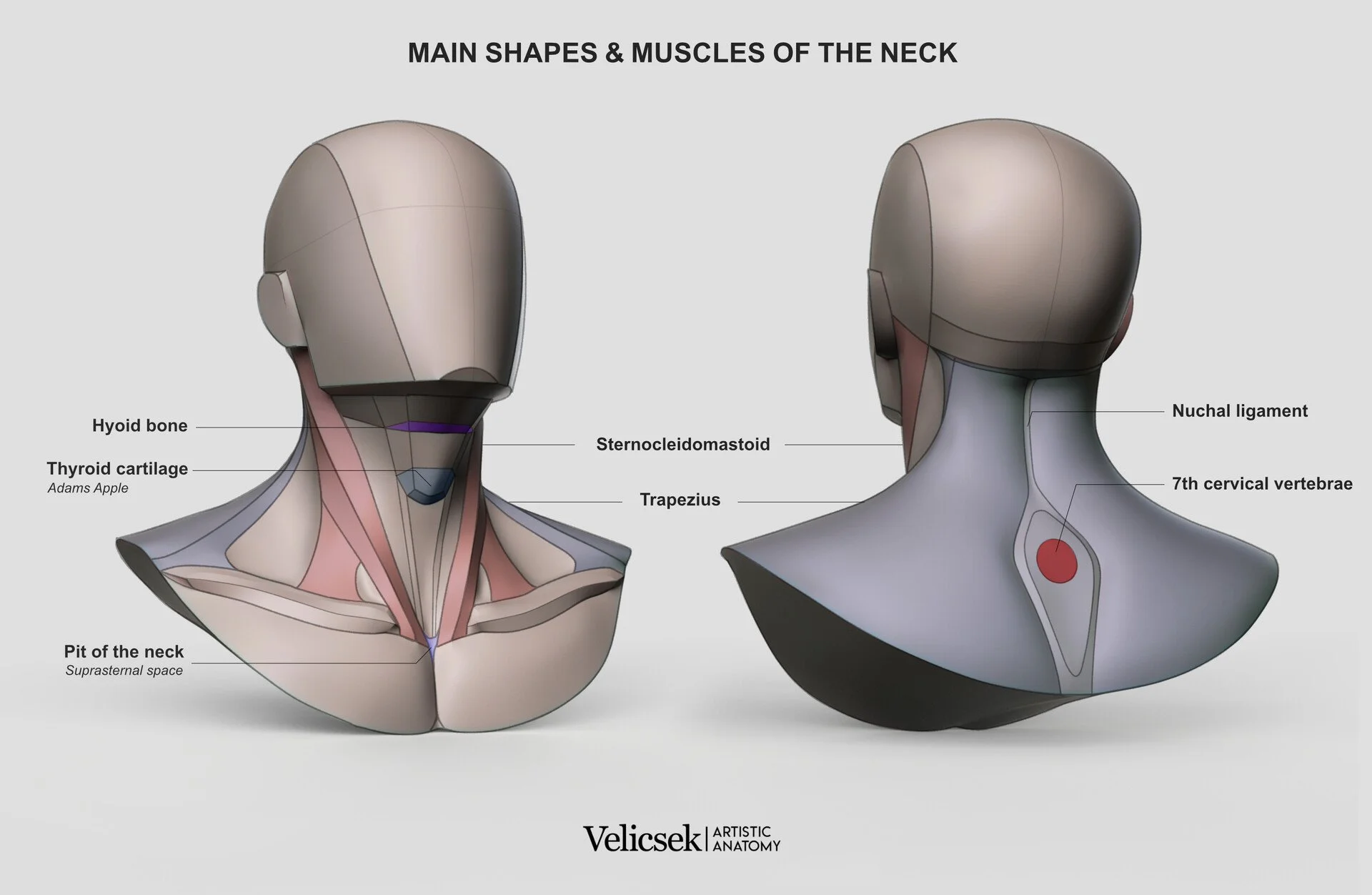
Main Shapes & Muscles of the Neck
Understanding neck anatomy can be one of the most challenging aspects of figure drawing and character sculpting. This 3D reference breaks down the complexity into clear, digestible landmarks and movements.
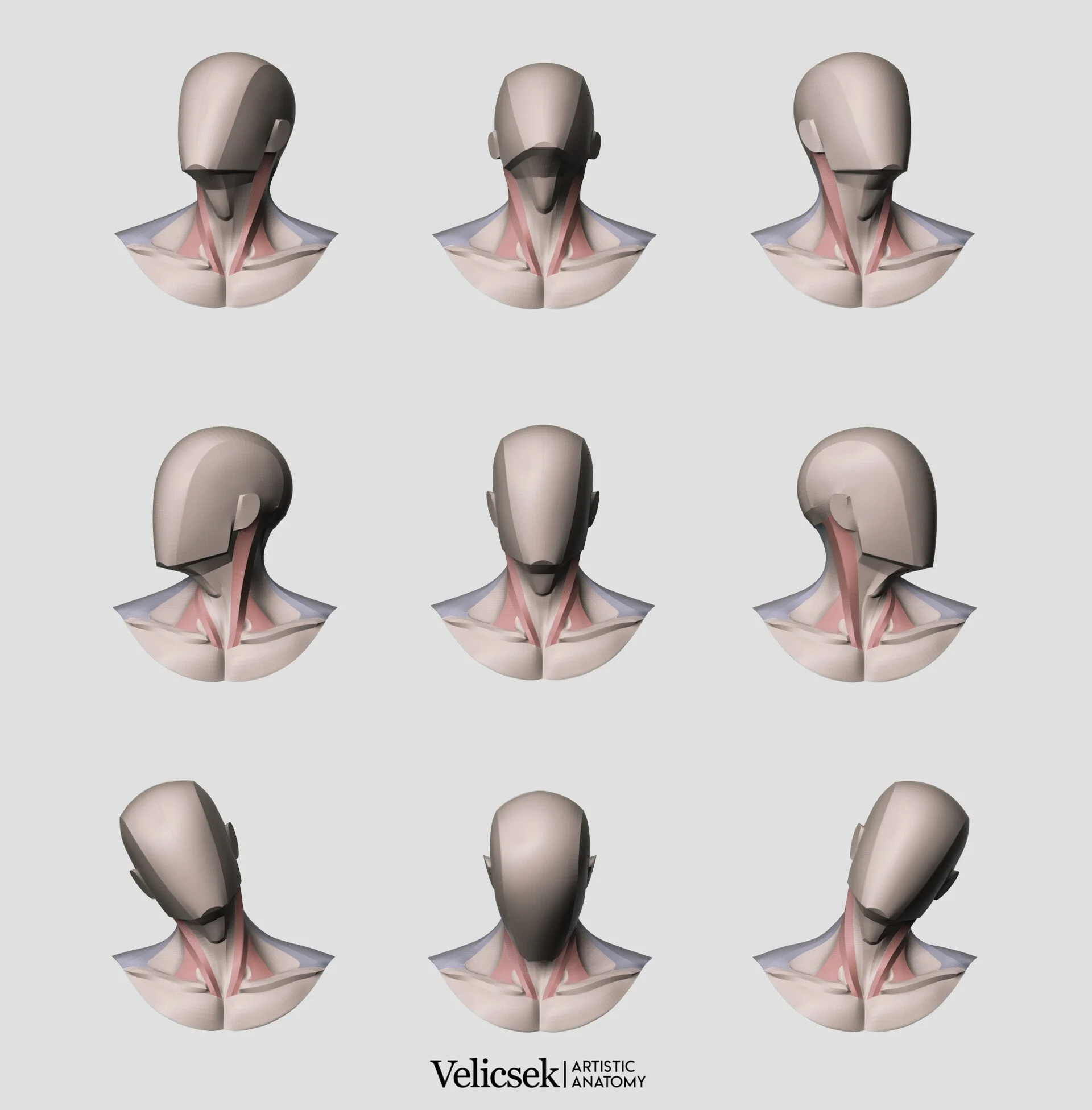
This anatomical 3D model provides a comprehensive view of neck structure, designed specifically for artists, sculptors, and students who need accurate reference material. Rather than overwhelming you with every anatomical detail, it focuses on the essential shapes and landmarks that matter most when creating realistic figures.
Key Features:
Simplified anatomy that highlights the sternocleidomastoid and trapezius—the two muscles that define the neck's form.
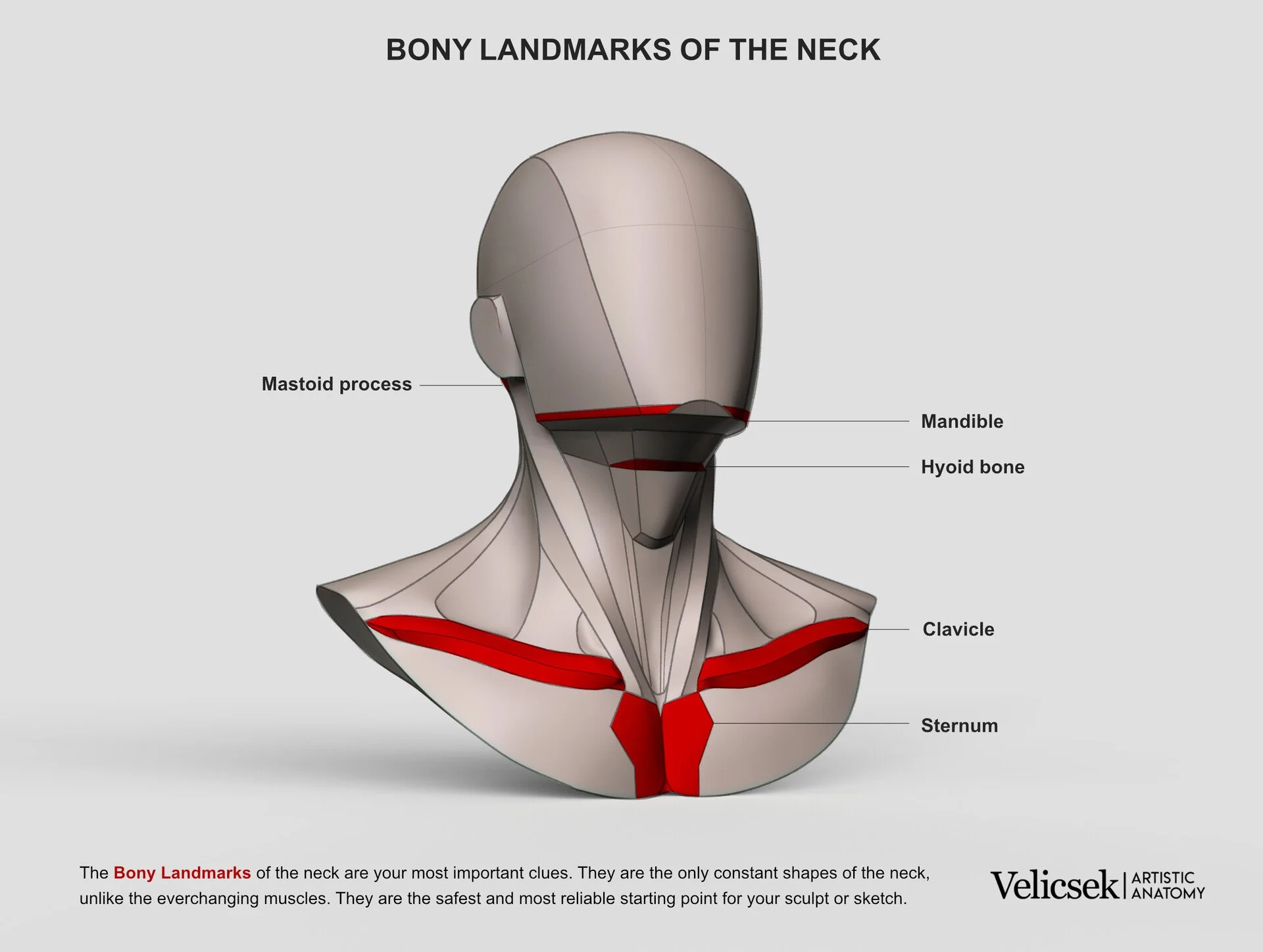
Bony landmarks as your constant reference points. Unlike muscles, these skeletal features never change, making them your most reliable guide for any pose or angle.
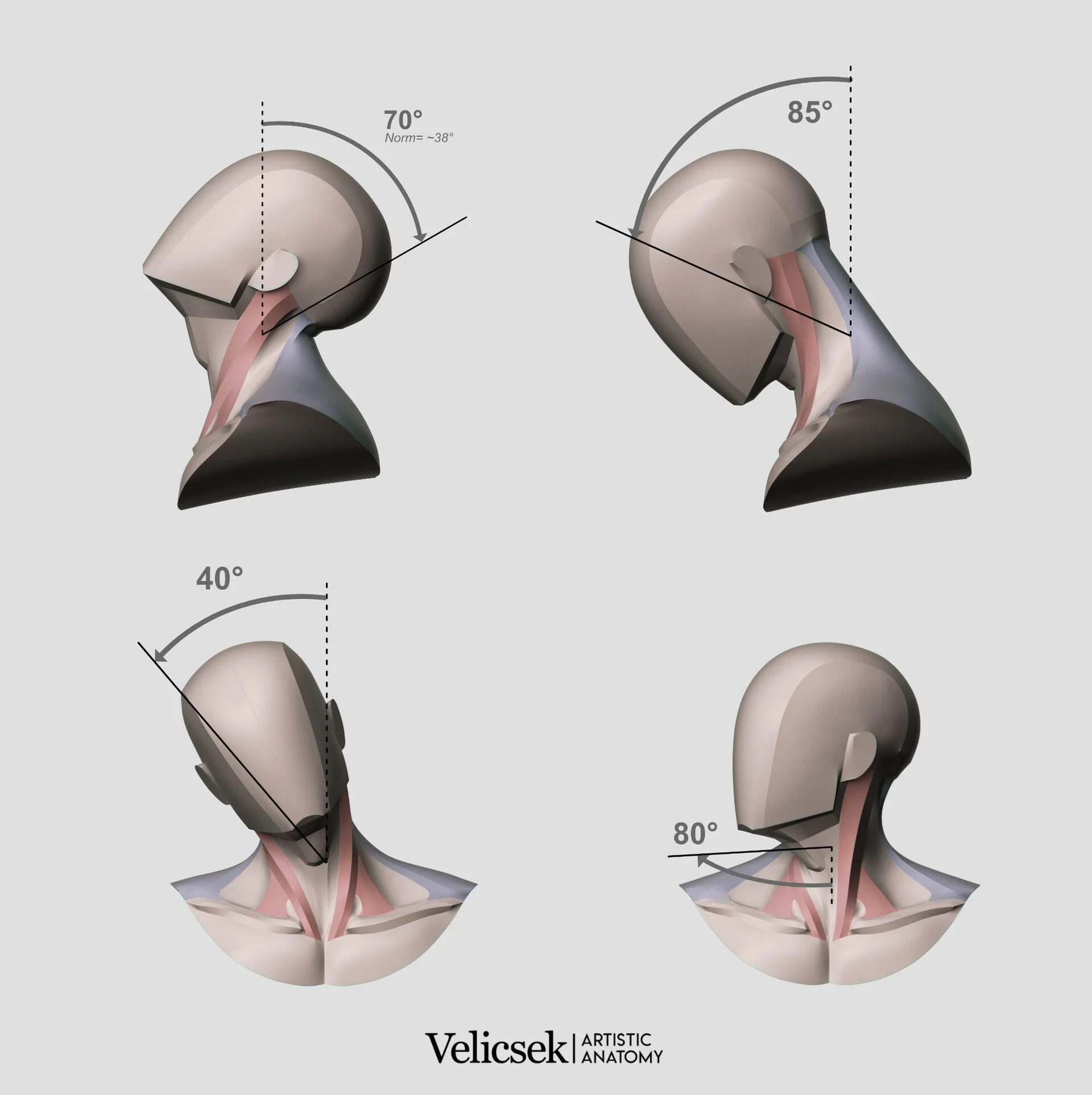
Full range of motion demonstrated across multiple poses: 85° flexion, 80° rotation, 70° extension, and 40° lateral flexion. See exactly how the neck moves and how forms interact during different positions.
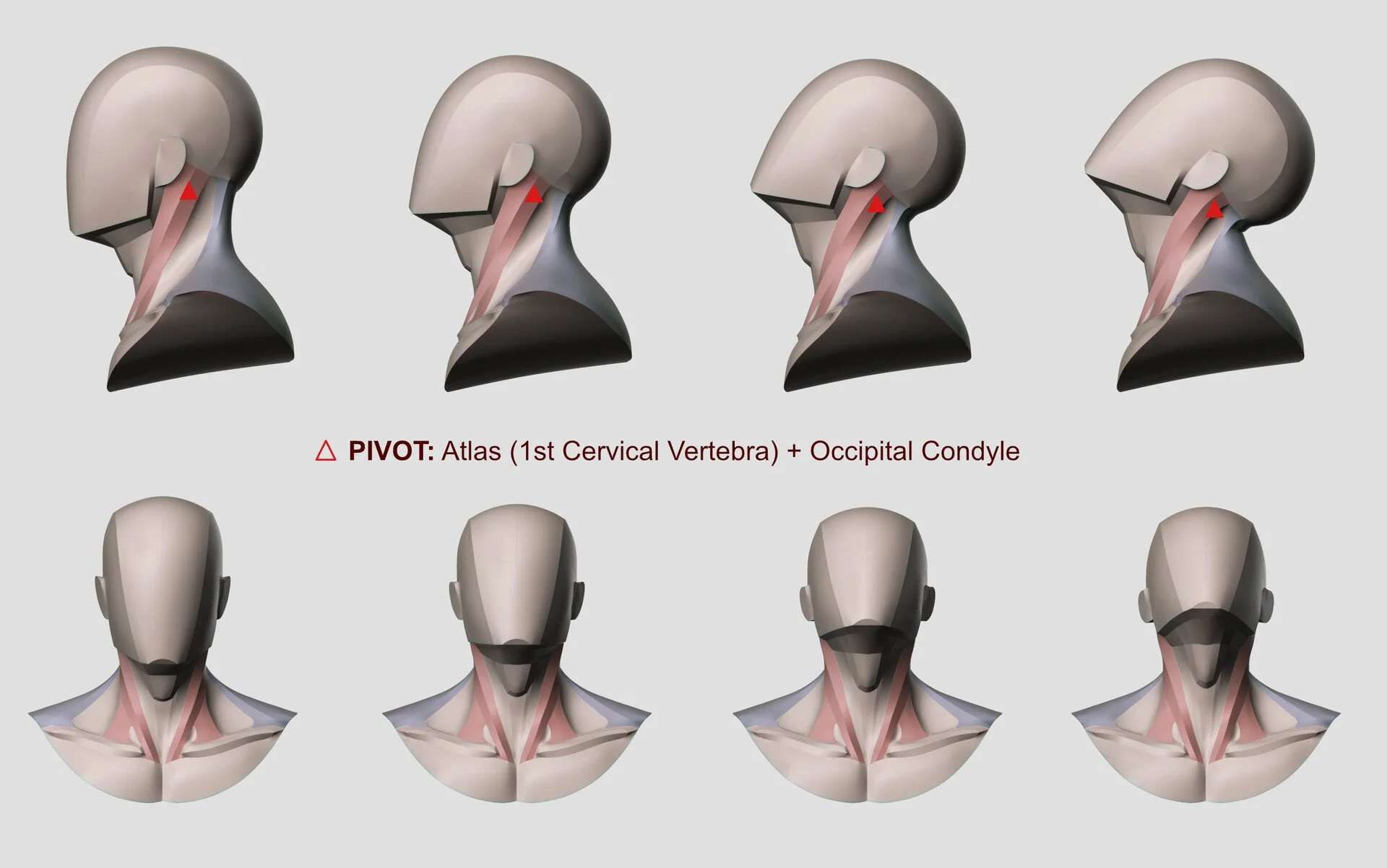
Critical pivot points showing where the atlas vertebra meets the occipital condyle—essential for understanding natural head movement and articulation.