
Proportions Guide of the Human Skull & Anatomy Studies
If you've ever searched "skull proportions" on Google, there's a good chance you've already seen this work, because these illustrations have held the top spot in Google Image results for years, and were featured in a dedicated article on 80 Level, one of the leading publications for 3D artists and game developers.
This series represents years of independent anatomy study, built entirely out of a personal need: I wanted reference material that actually worked for drawing and sculpting portraits - clear, systematic, and built around how artists think rather than how medical textbooks are written.
Every illustration in this collection was created from scratch, grounded in measurement, and designed to be immediately usable at the desk or the sculpture stand.
This work sits at the intersection of scientific accuracy and practical artistic application — the kind of reference that doesn't just teach you what the skull looks like, but how to think about it when building a portrait from nothing.
📖Read the full feature on 80 Level: https://80.lv/articles/a-short-guide-on-human-skull-proportion
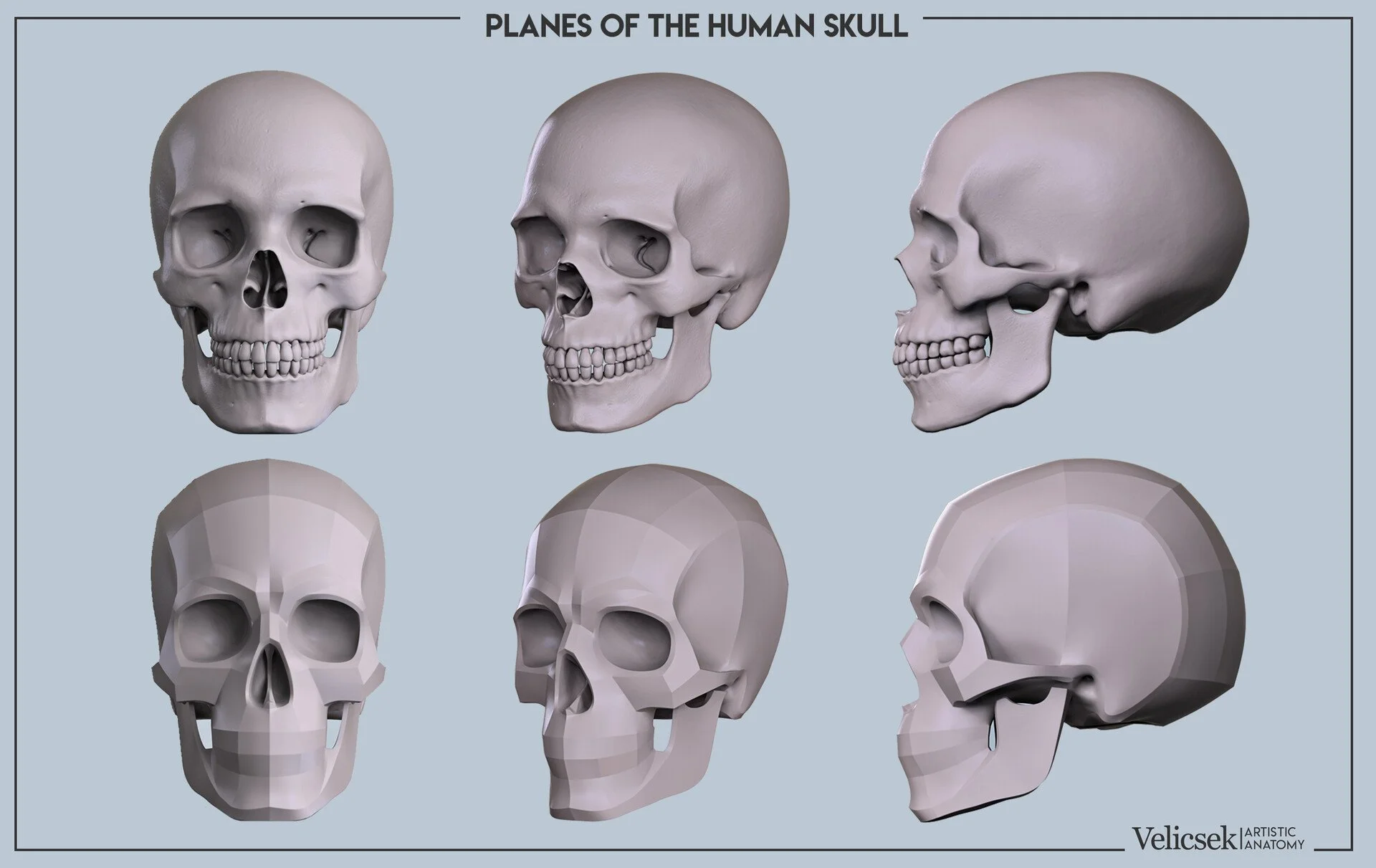
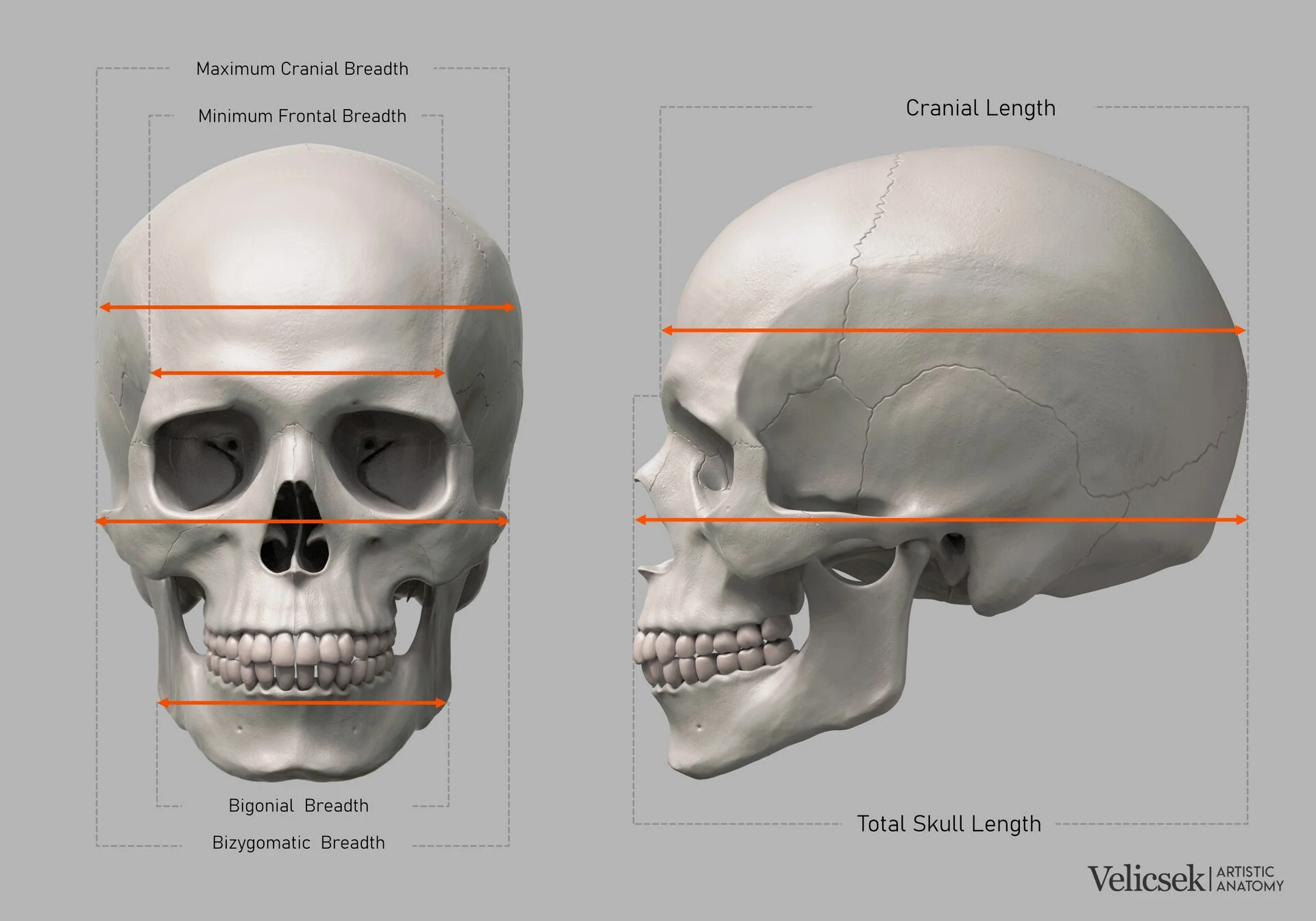
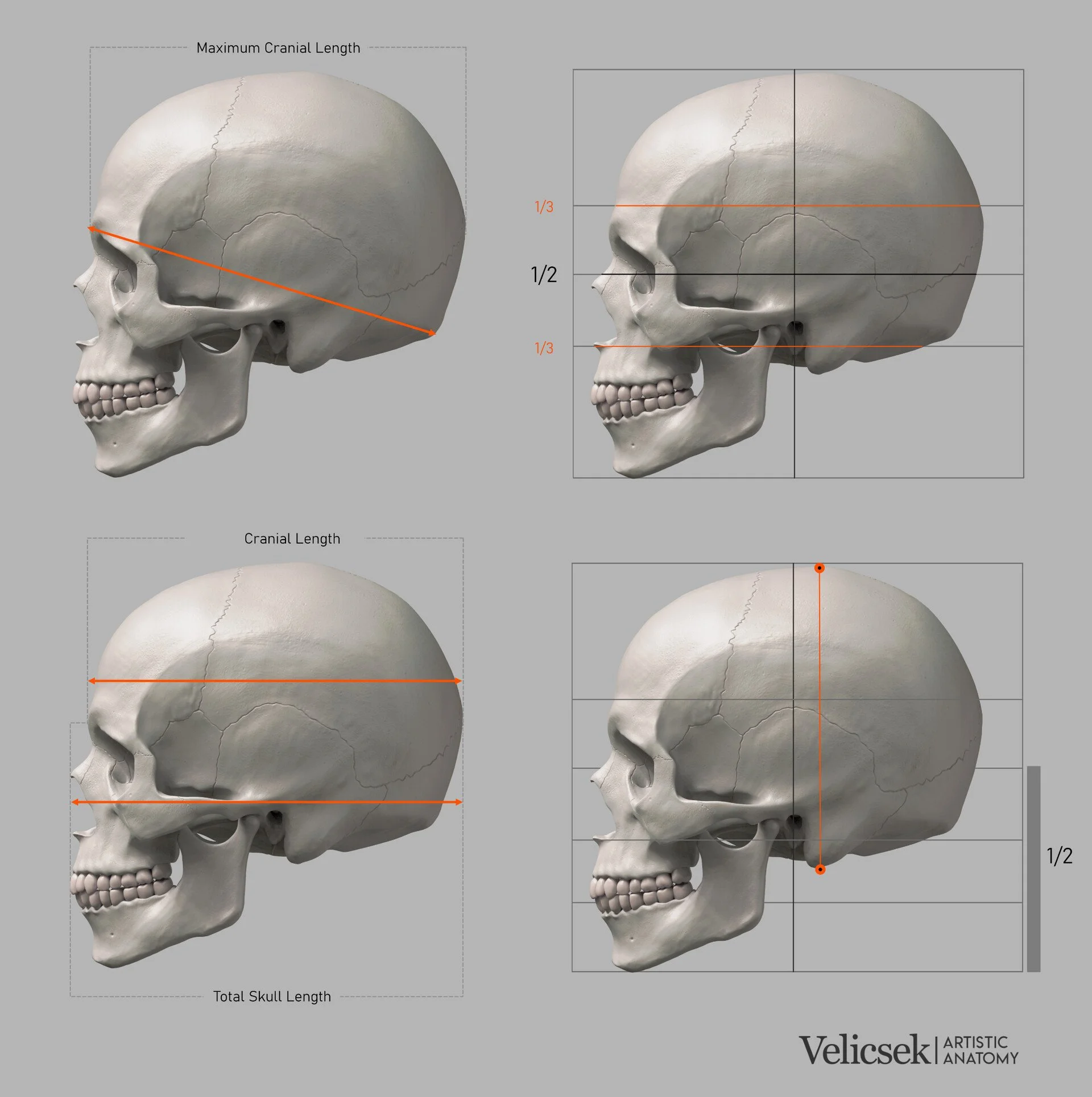
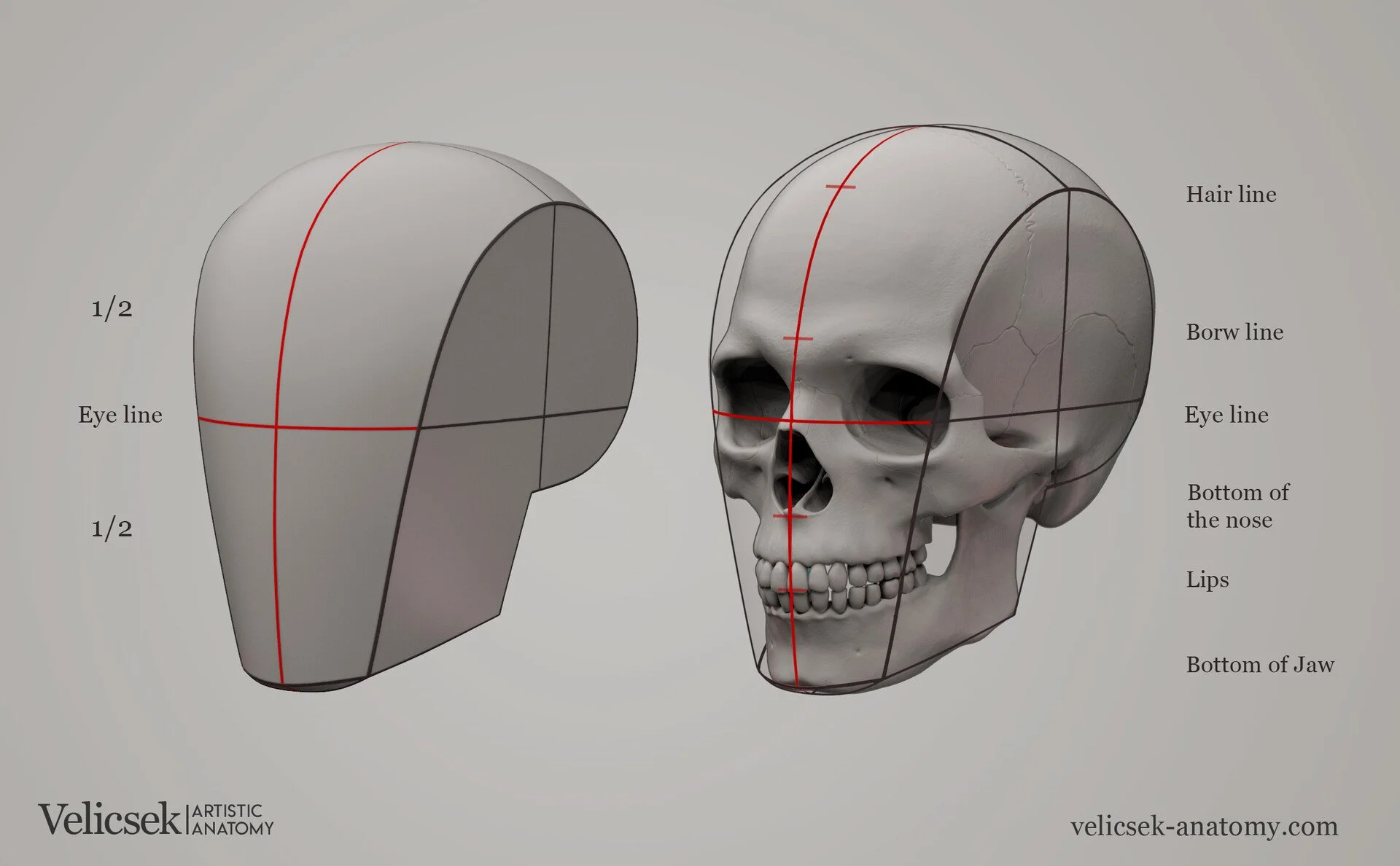
What this series covers:
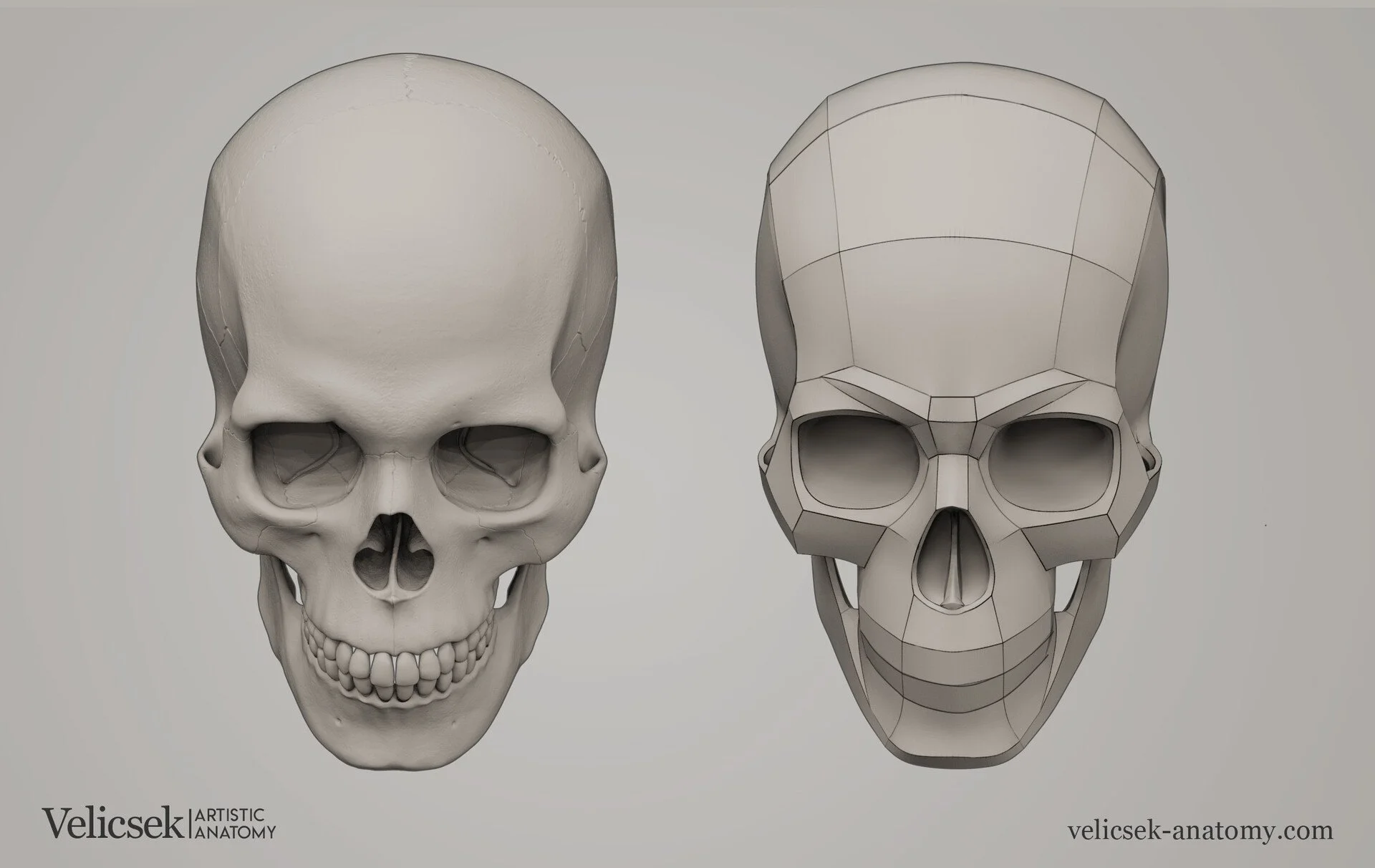
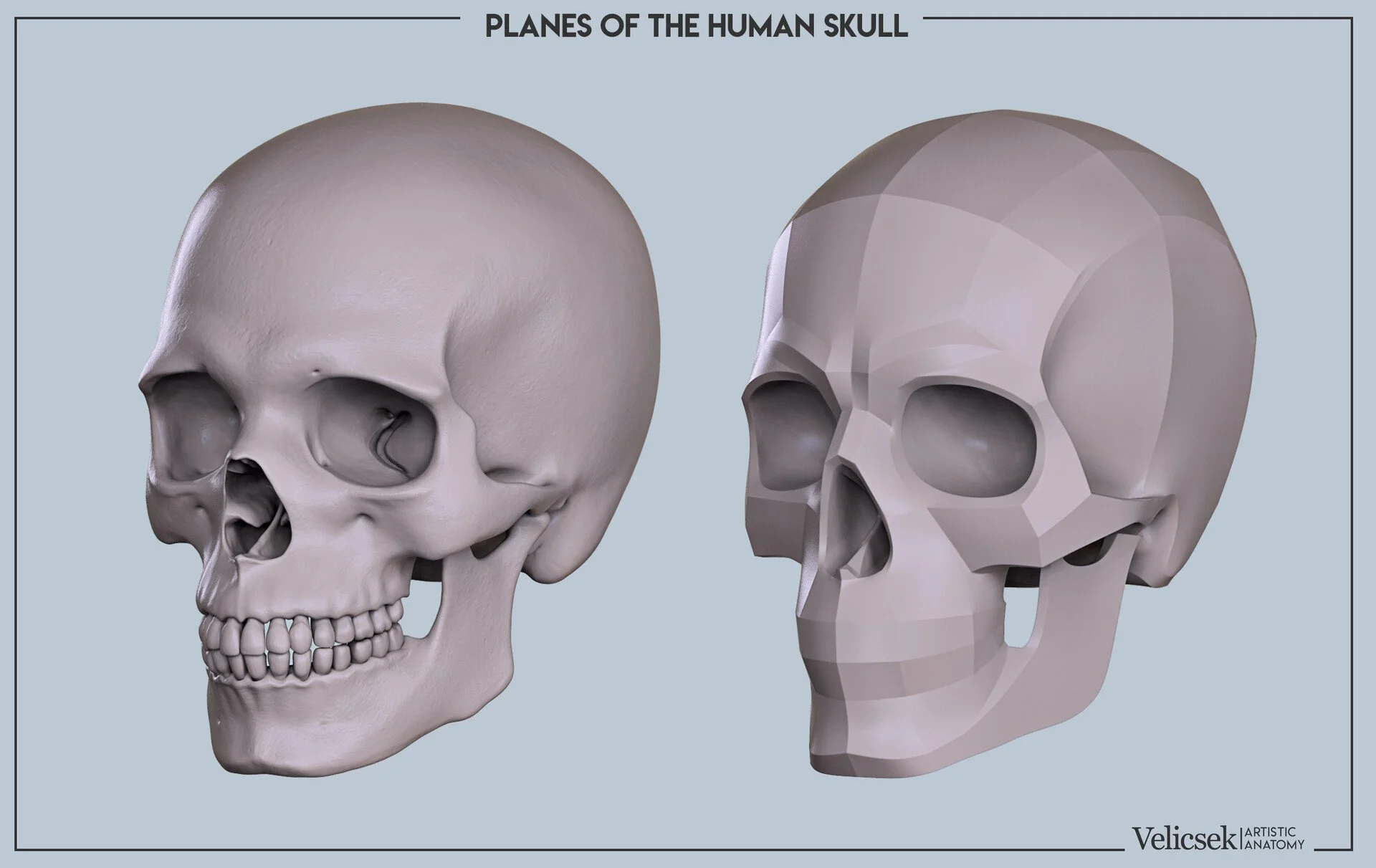
Planes of the human skull — organic form compared directly to planar breakdowns across front, three-quarter, and side views, so you can see exactly how light and shadow will behave across any angle
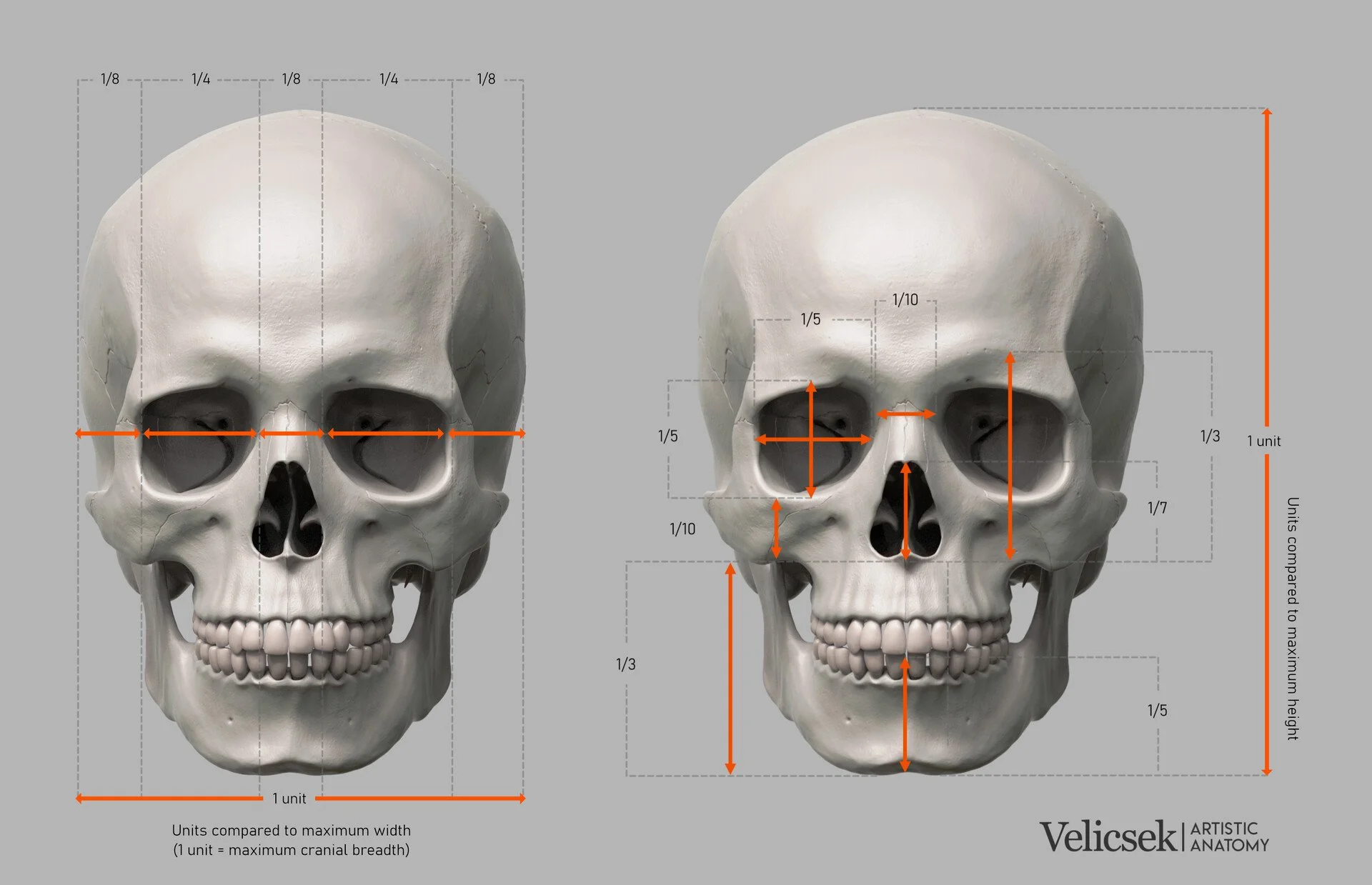
Units and divisions — the skull mapped using maximum cranial breadth and height as base units, giving you a proportional system that scales to any head size
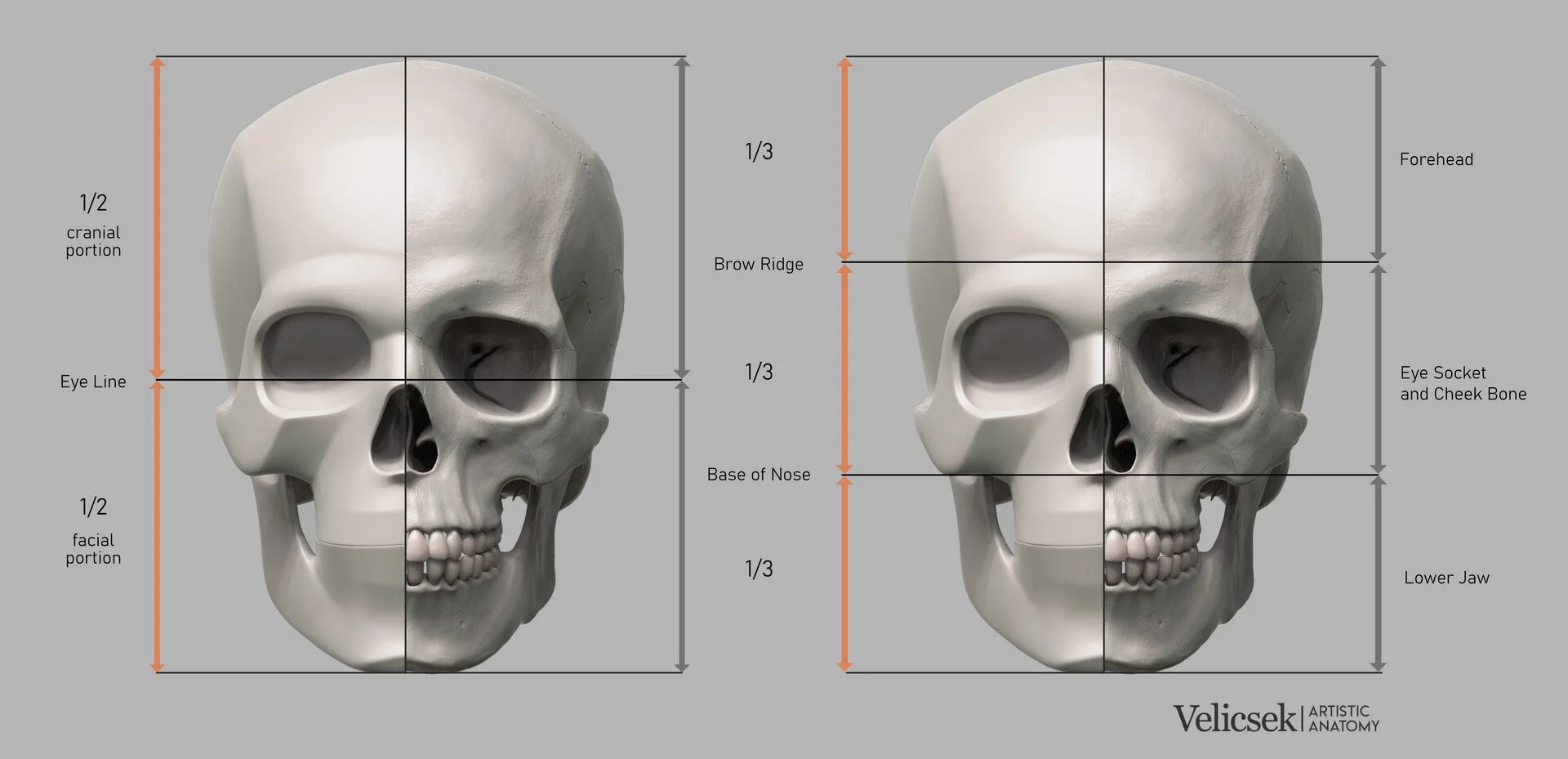
Midpoint and thirds — how the skull divides into its cranial and facial halves at the eye line, and how the face further splits into three vertical thirds from forehead to jaw
Primary shapes and proportions — the underlying sphere and oval geometry that defines the skull's silhouette from the front and side, the foundation of every solid portrait construction method
Cranial breadth, length, and total skull measurements — bizygomatic and bigonial breadth, frontal breadth, cranial length, and total skull length, annotated and measurable
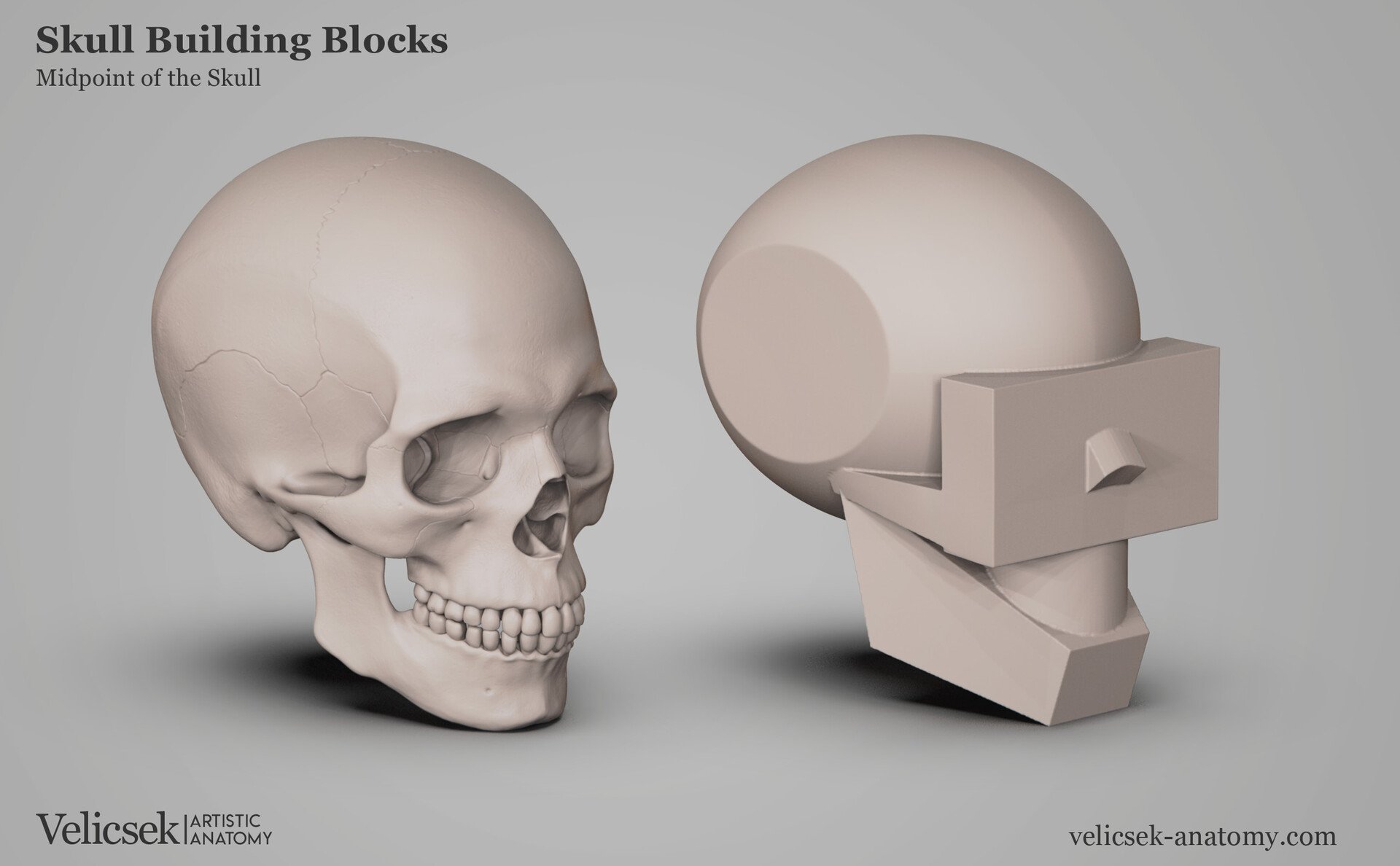
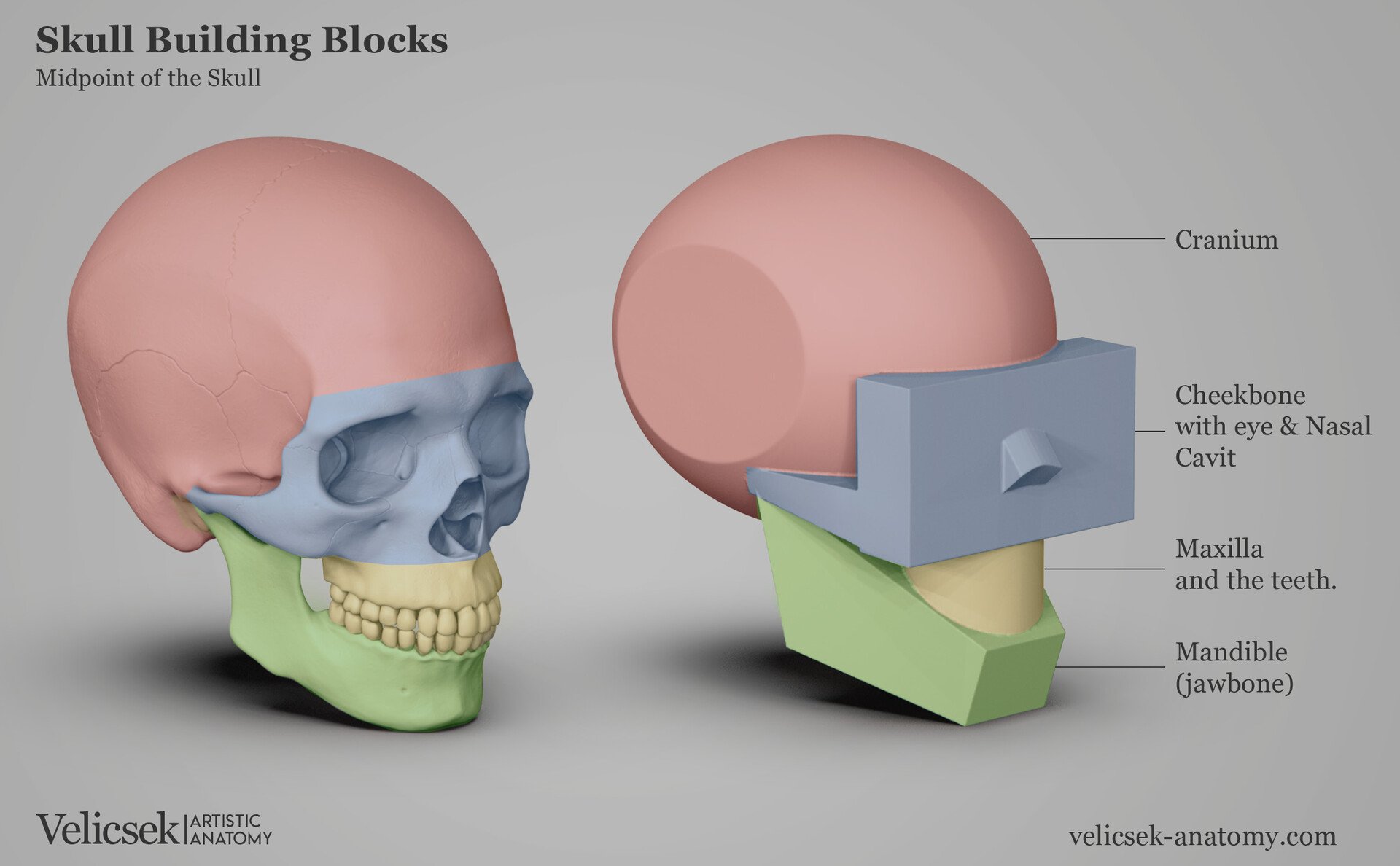
Skull building blocks — a colour-coded breakdown of the skull into its four primary masses (cranium, cheekbone and nasal cavity, maxilla, and mandible), paired with simplified geometric equivalents for direct application in drawing and sculpting