Planes of the Head - Study Notes (Based on the Asaro Mannequin)
There's a reason the Asaro head has been a studio staple for over half a century. When you're learning to draw or sculpt the human face, the single biggest obstacle isn't technical skill — it's not being able to see the form clearly enough to make decisions with confidence.
The planes of the head solve that problem directly.
By reducing the complex, continuously curving surface of the human face into flat, readable planes, the Asaro model makes visible what is normally hidden — the underlying geometry that determines how light falls, how form turns, and why certain passages of a portrait feel solid while others feel uncertain.
These study notes are my own working analysis of that geometry, built to answer the specific questions I kept running into when drawing and sculpting portraits.
What these notes cover:
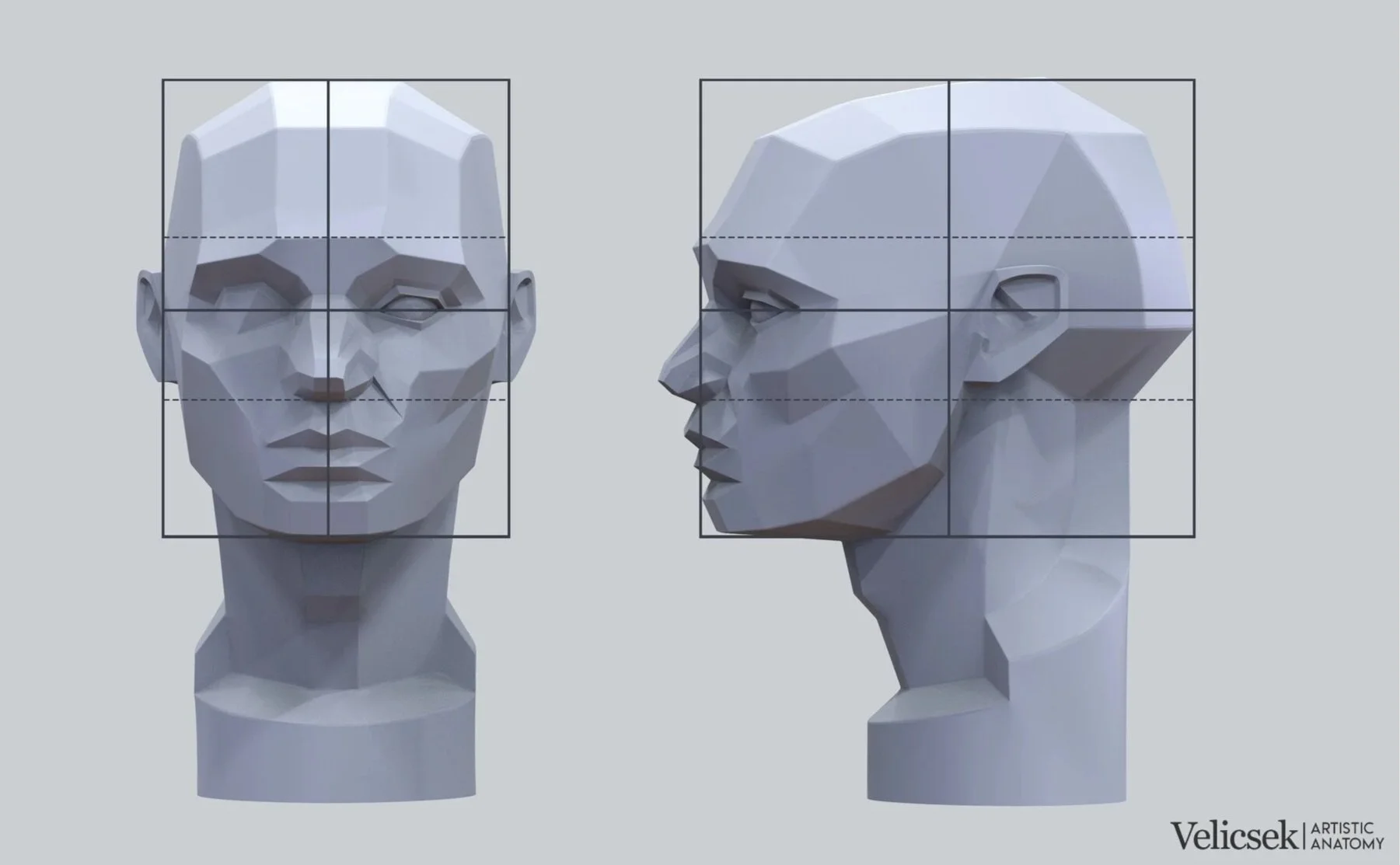
Front and side view with proportion grid — the planar head mapped against a proportion framework from both the frontal and profile views, with dashed landmark lines marking the eye level and base of nose divisions. The left side of each pair focuses on primary planes; the right shifts attention to secondary shapes and how they relate
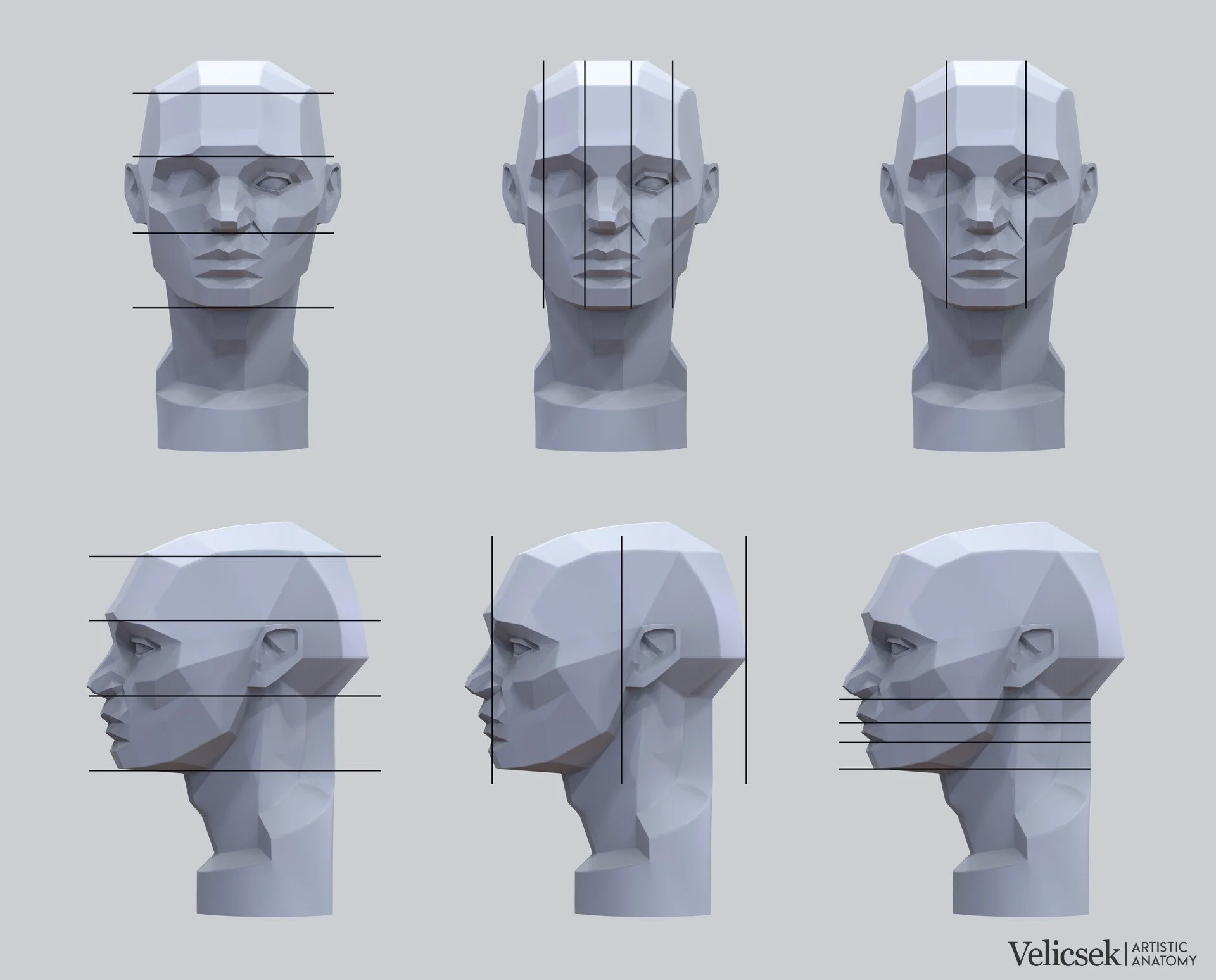
Six-view plane analysis — front, three-quarter, and side views examined twice: once reading horizontal landmarks, once reading vertical divisions. Together these six views cover every angle an artist is likely to encounter in portrait work
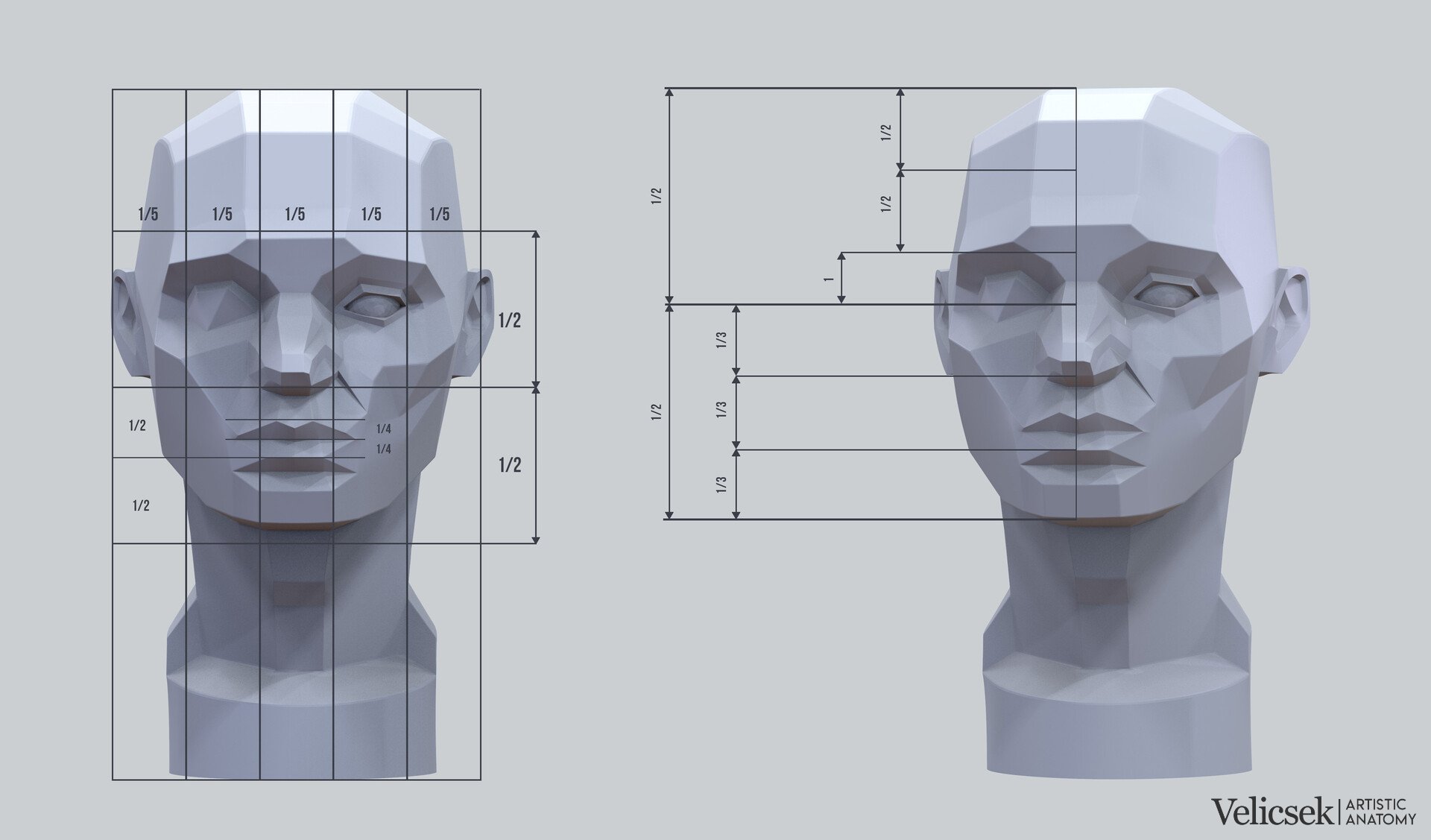
Full proportion system: fifths, thirds, and halves — the most comprehensive view in the series, annotating the face across both axes simultaneously. Five equal vertical fifths govern horizontal feature placement; halves, thirds, and quarters map the vertical hierarchy from hairline to chin. The right panel adds a relational measurement system showing how each zone scales to the others