Planes of the Human Eye
The eye is the most scrutinised feature in any portrait. Viewers will forgive an imprecise ear or a slightly off chin — but a misread eye reads as immediately wrong, even to people who can't explain why.
The reason is almost always structural. Most artists learn to draw the eye without ever truly understanding its form — the layered geometry of the orbit, the way the brow ridge casts shadow, the subtle planes of the lower lid that catch light differently from every angle.
This series breaks all of that down.
Every illustration here was built to answer the question I kept asking myself when studying portraits: what is actually happening in three dimensions here? The answer required going further than most eye anatomy references go — past the basic eyelid shapes and into the full orbital environment that surrounds and defines the eye.
What this series covers:
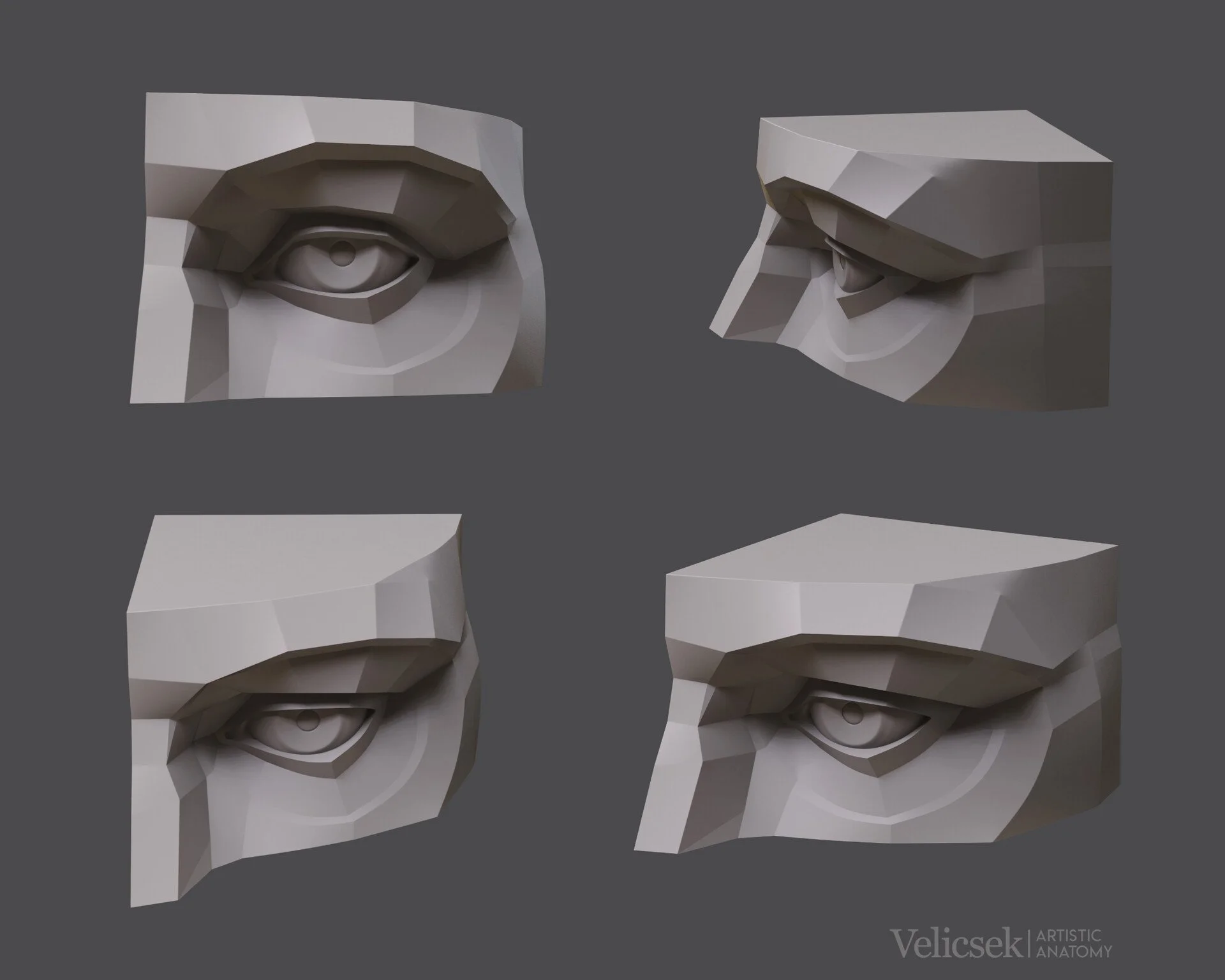
Planar model: four angles — the eye socket and brow region simplified into primary geometric planes, shown from front, three-quarter, and side views without outlines, so you can read the form purely through light and shadow the way you would in a real portrait study
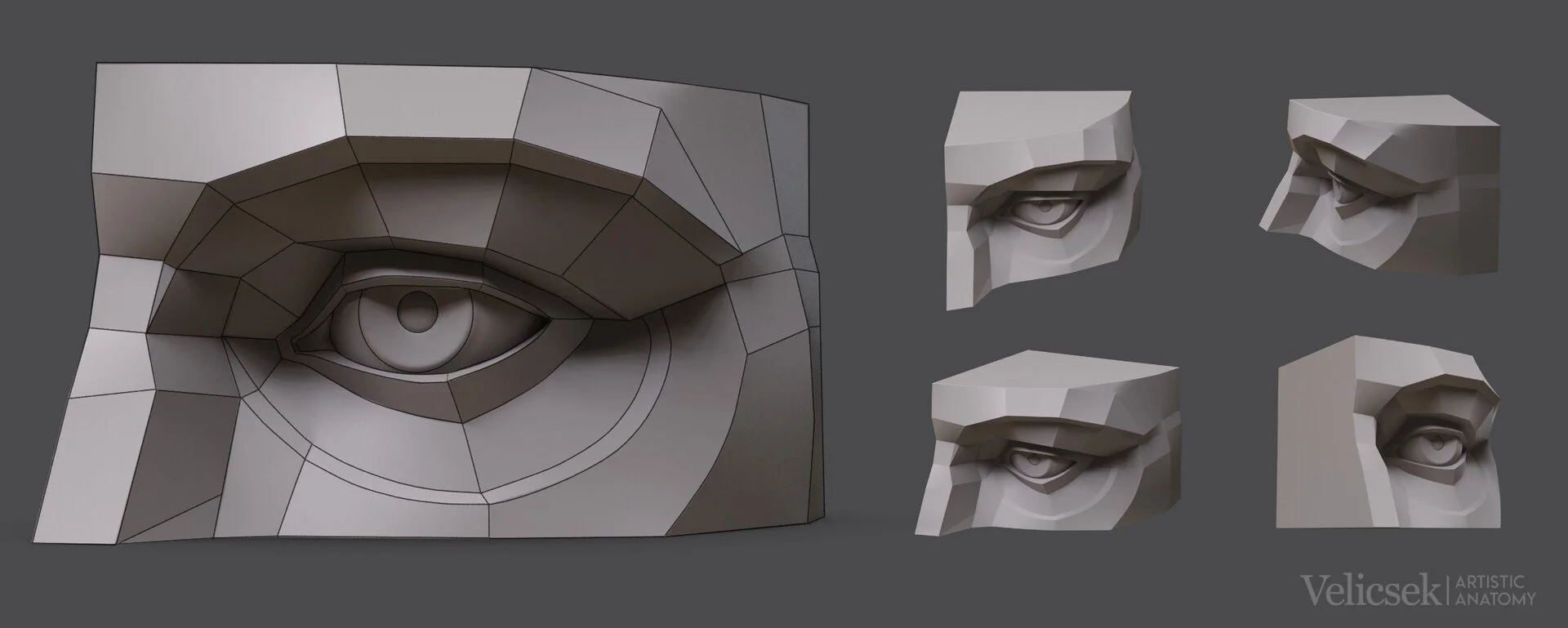
Planar model: annotated multi-view — the same planar breakdown with plane outlines made visible, paired with five additional angle studies so you can map every facet of the orbital structure from any approach
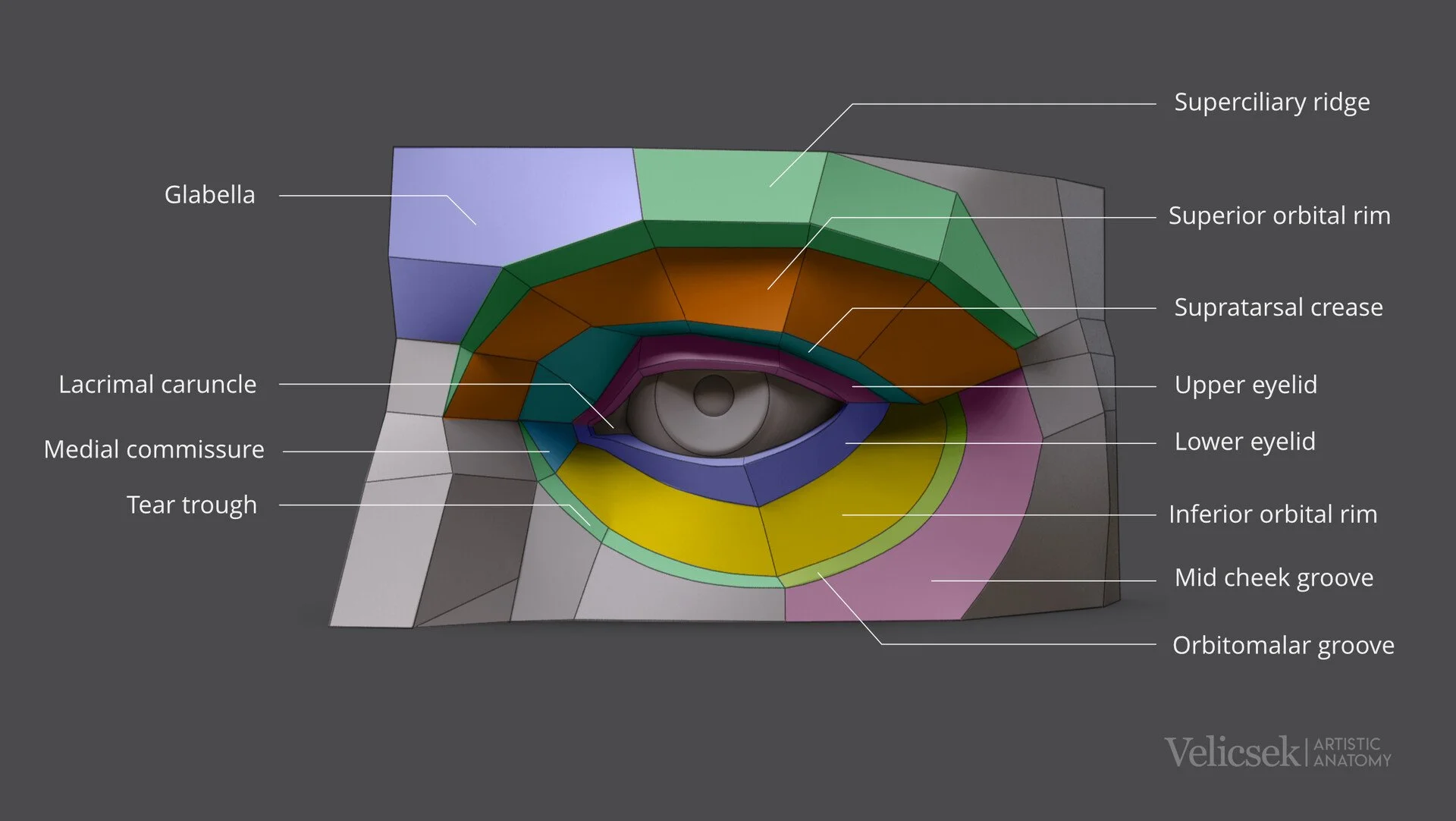
Colour-coded orbital regions — every distinct anatomical zone of the eye area identified and colour-separated on the planar model, covering the superciliary ridge, superior and inferior orbital rims, supratarsal crease, upper and lower eyelids, lacrimal caruncle, medial commissure, tear trough, glabella, mid cheek groove, and orbitomalar groove.
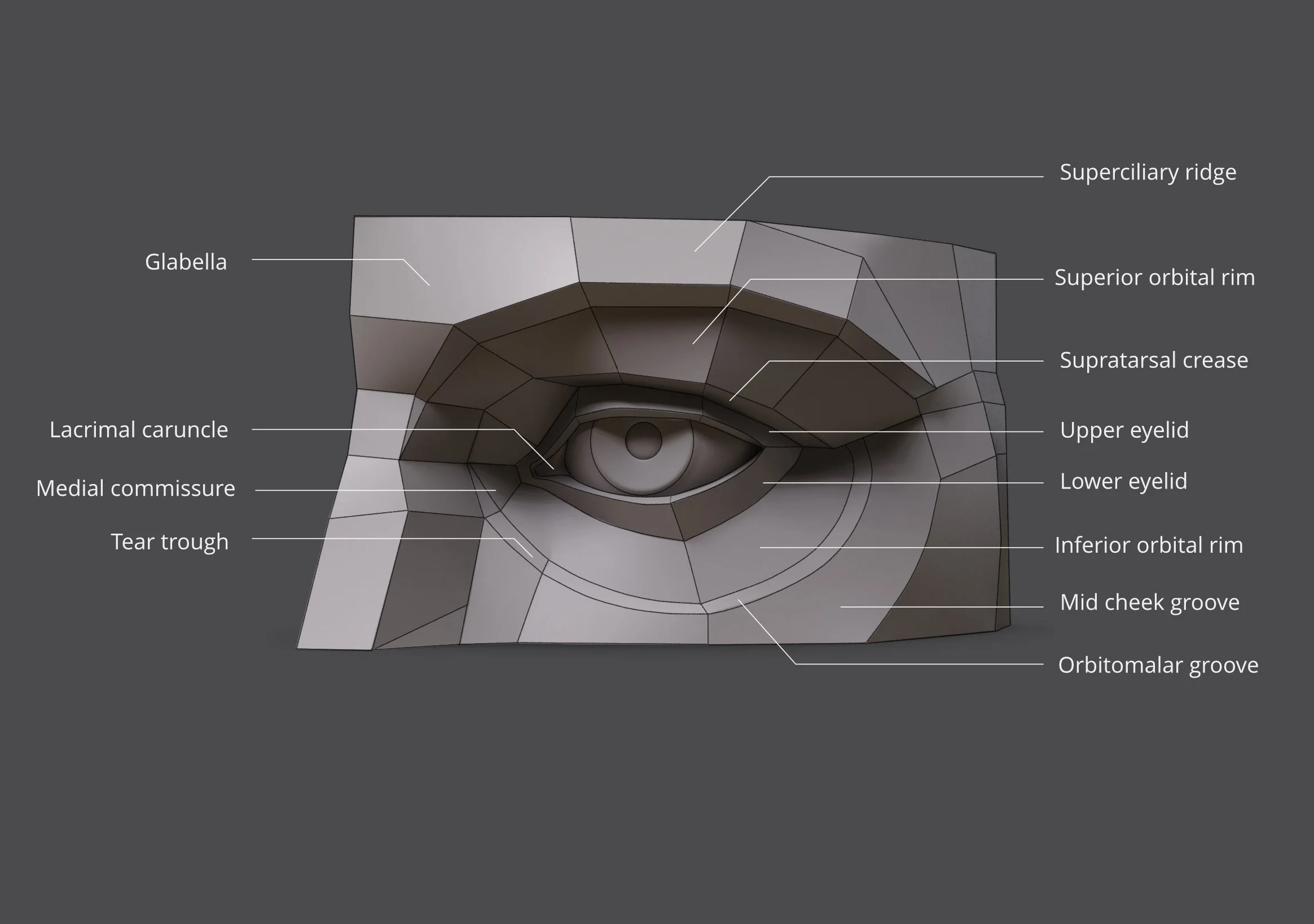
Labelled landmark reference — the same orbital model in neutral grey with all landmarks annotated, designed as a clean, printable reference for use at the desk or sculpture stand