Unreleased Anatomy Studies
Some work never makes it out of the folder, not because it wasn't worth making, but because there was always something else to finish first. This is that work.
This collection brings together a series of anatomy studies I developed over time that never found a home in a finished publication. They cover ground I care deeply about: the structural logic of the human head, the mechanical truth of how it moves, and the visual systems that make it possible to draw all of it with confidence.
Consider this an unfiltered look at the research and reference development that sits behind everything I publish. These studies may yet become something more. For now, I'm glad they're finally out of the folder.
The collection is organised into seven areas of study:
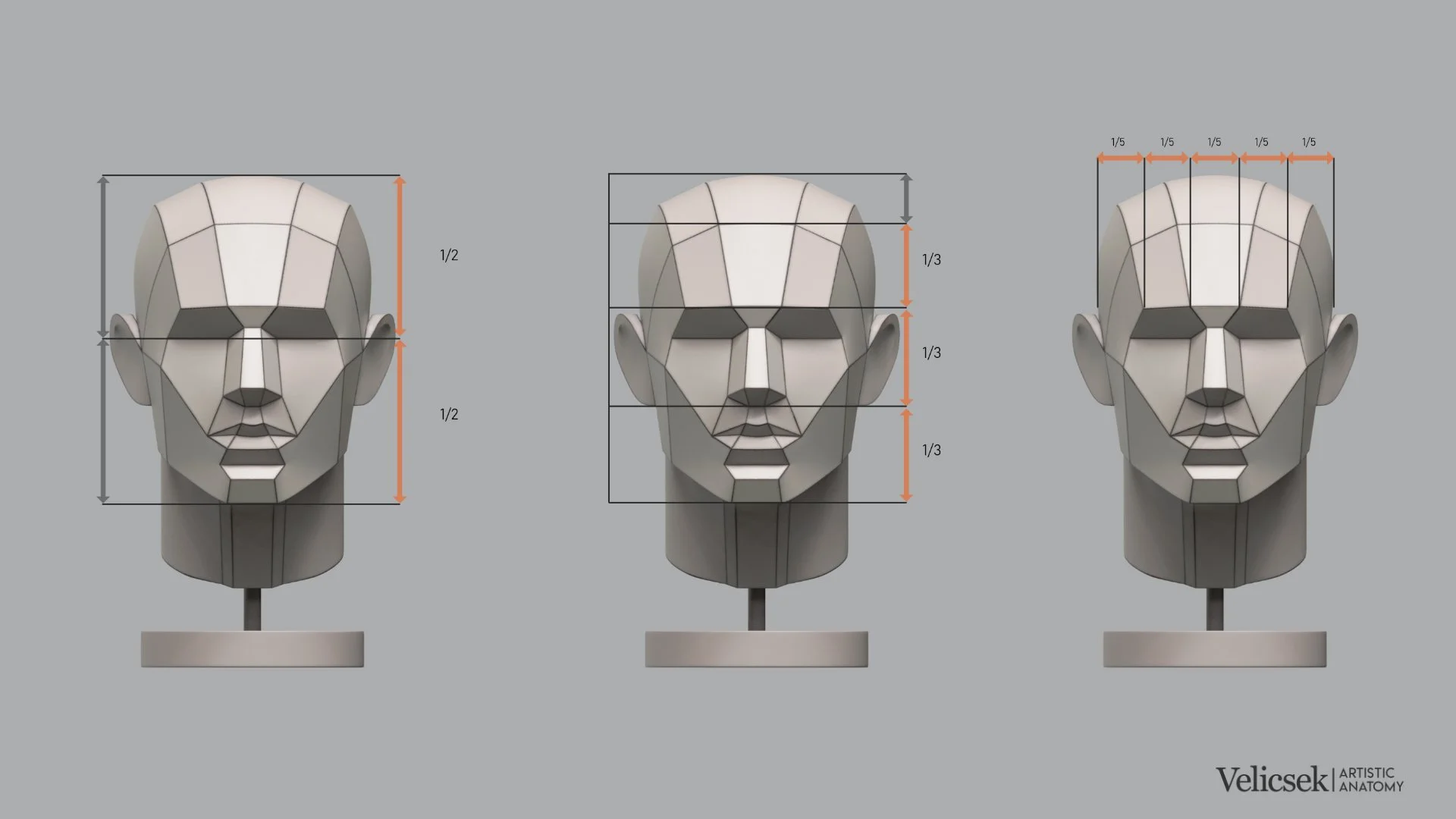
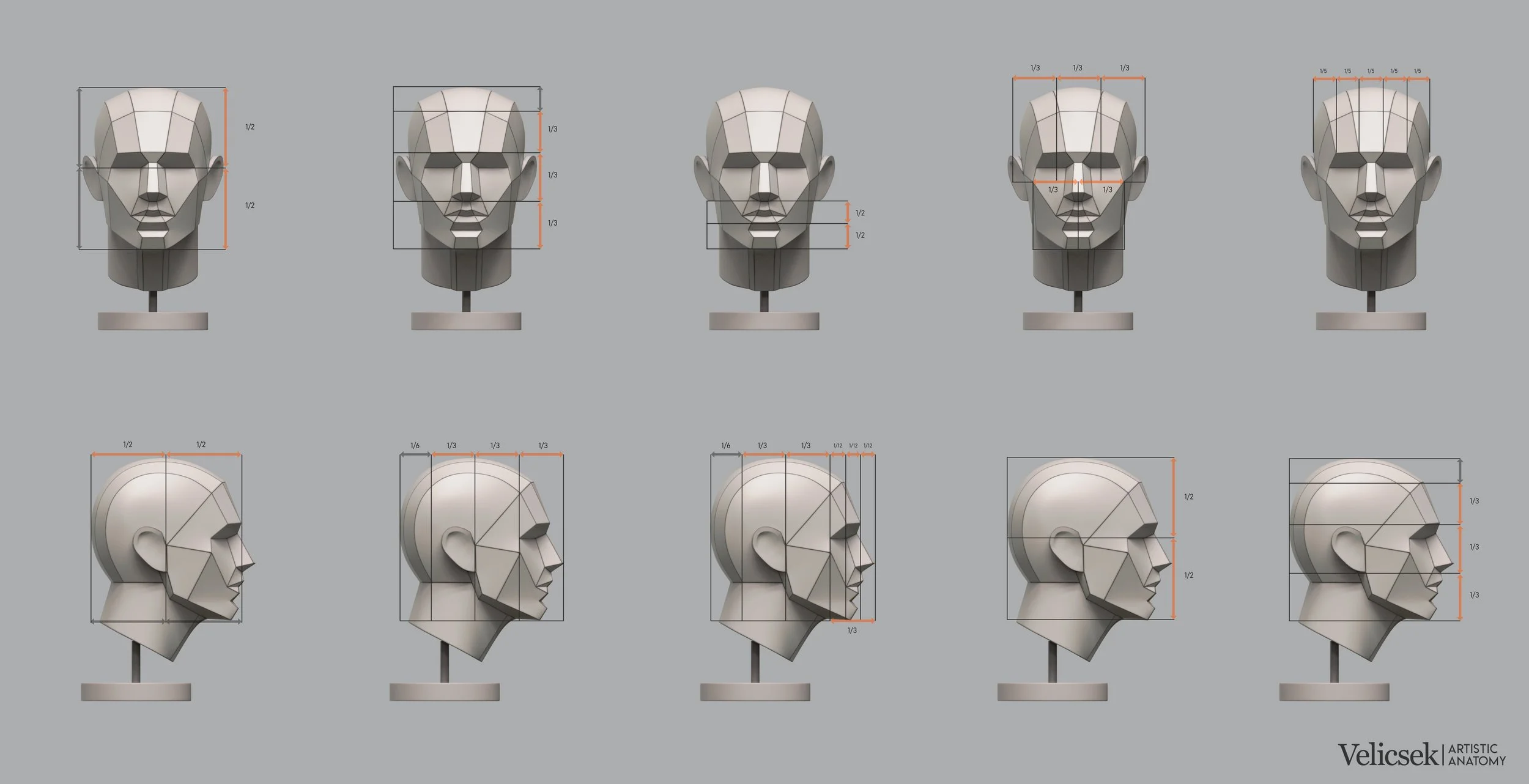
Proportions & Measurements — A complete system for dividing the head into halves, thirds, and fifths from both front and side views. The kind of grid you build once and use forever.
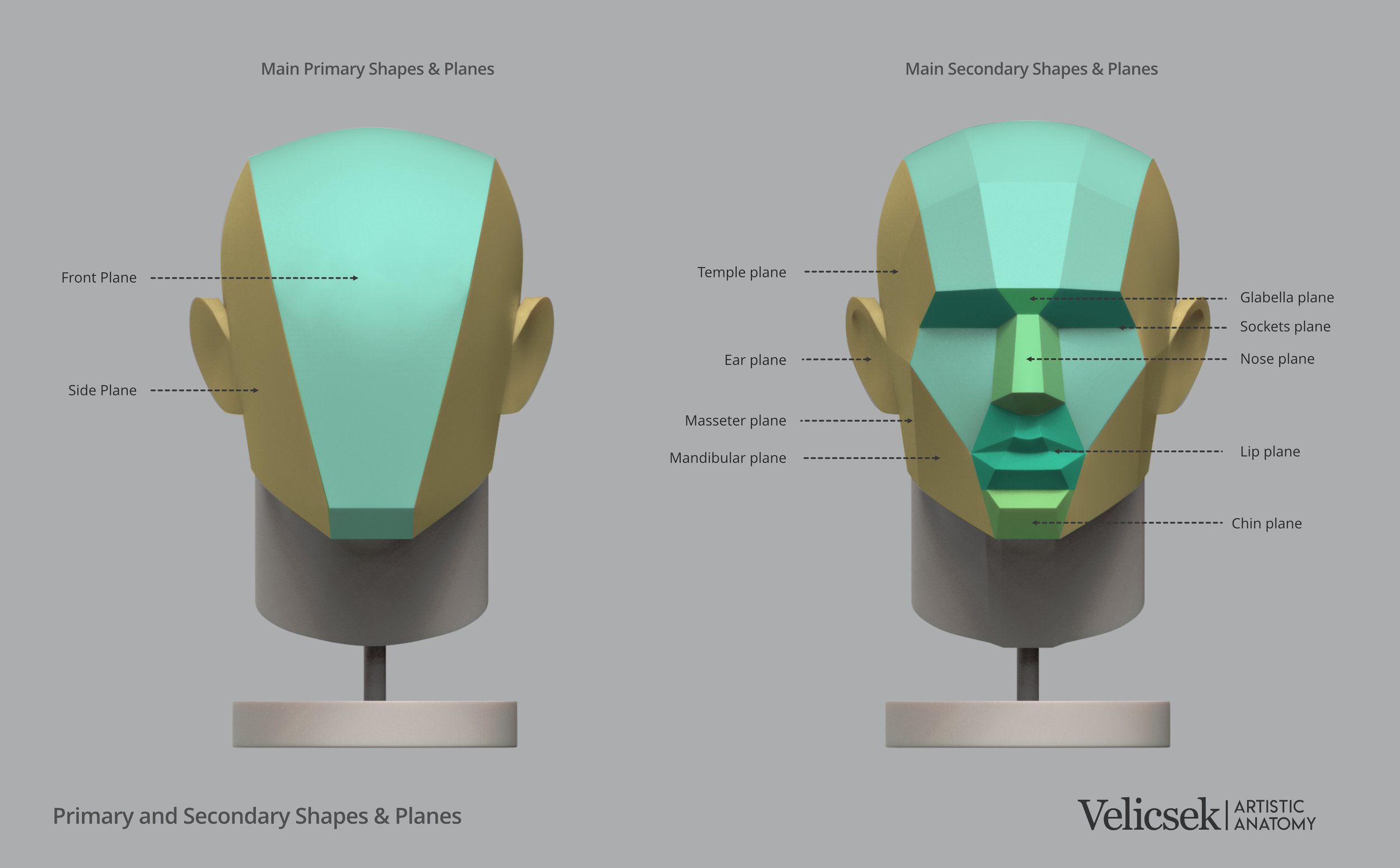
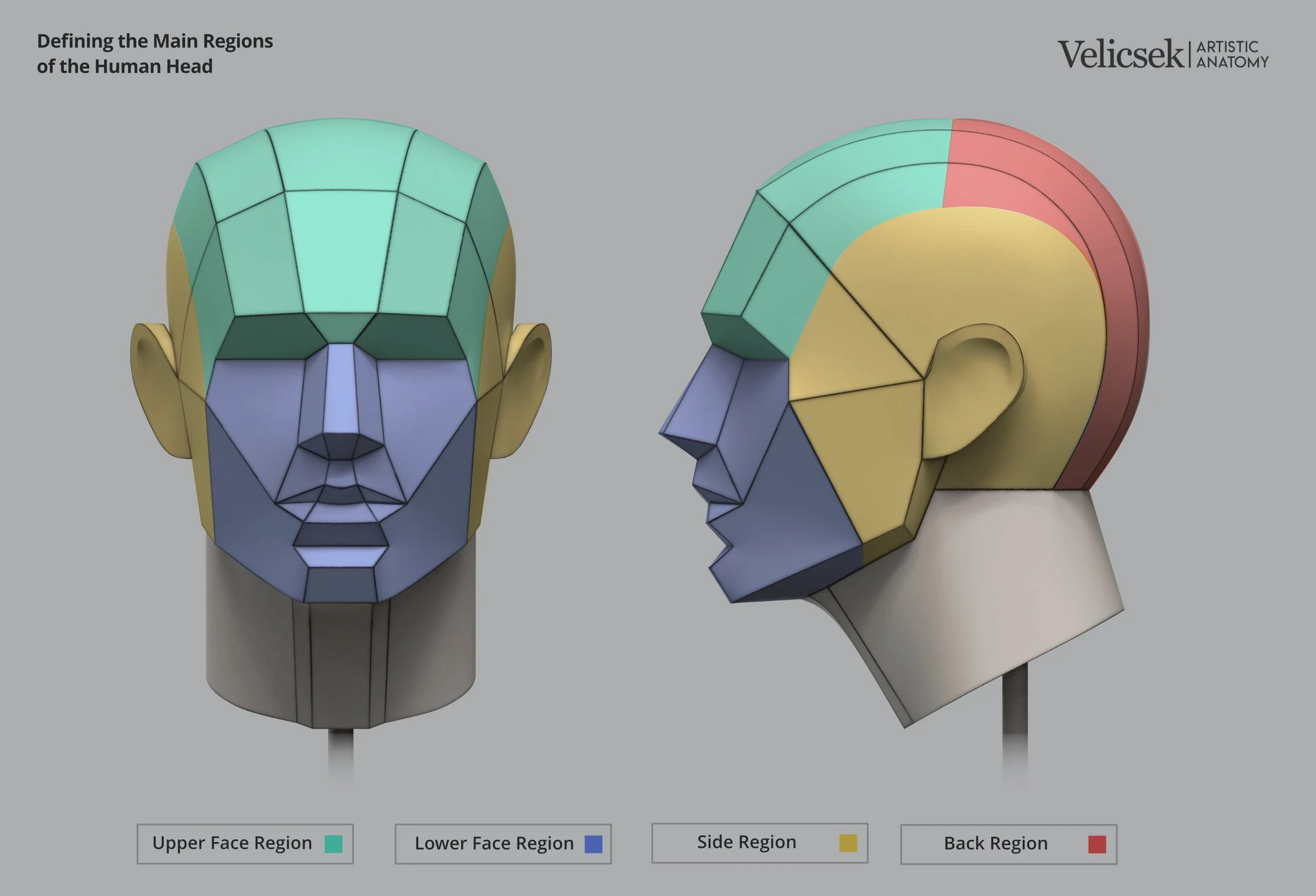
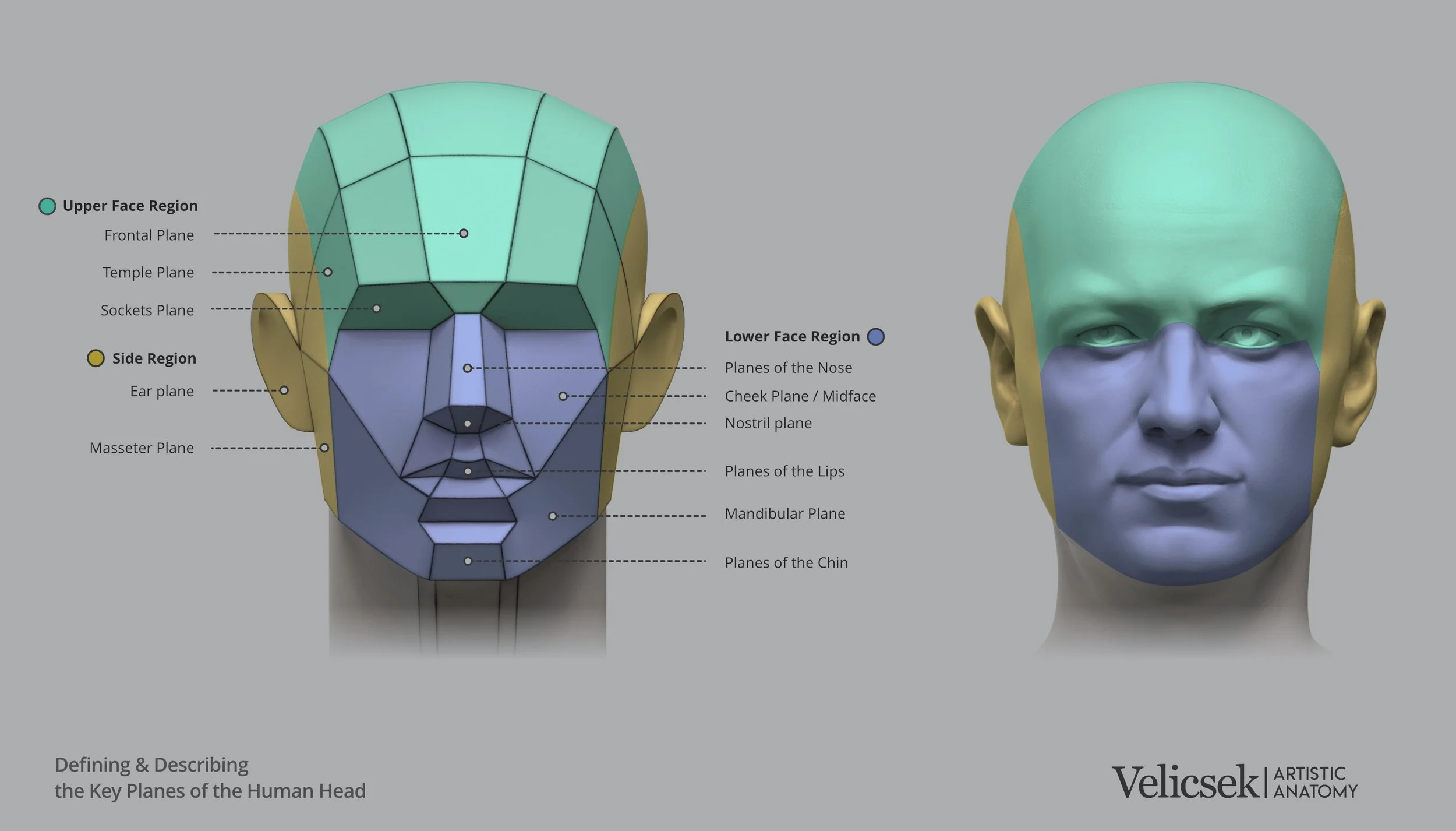
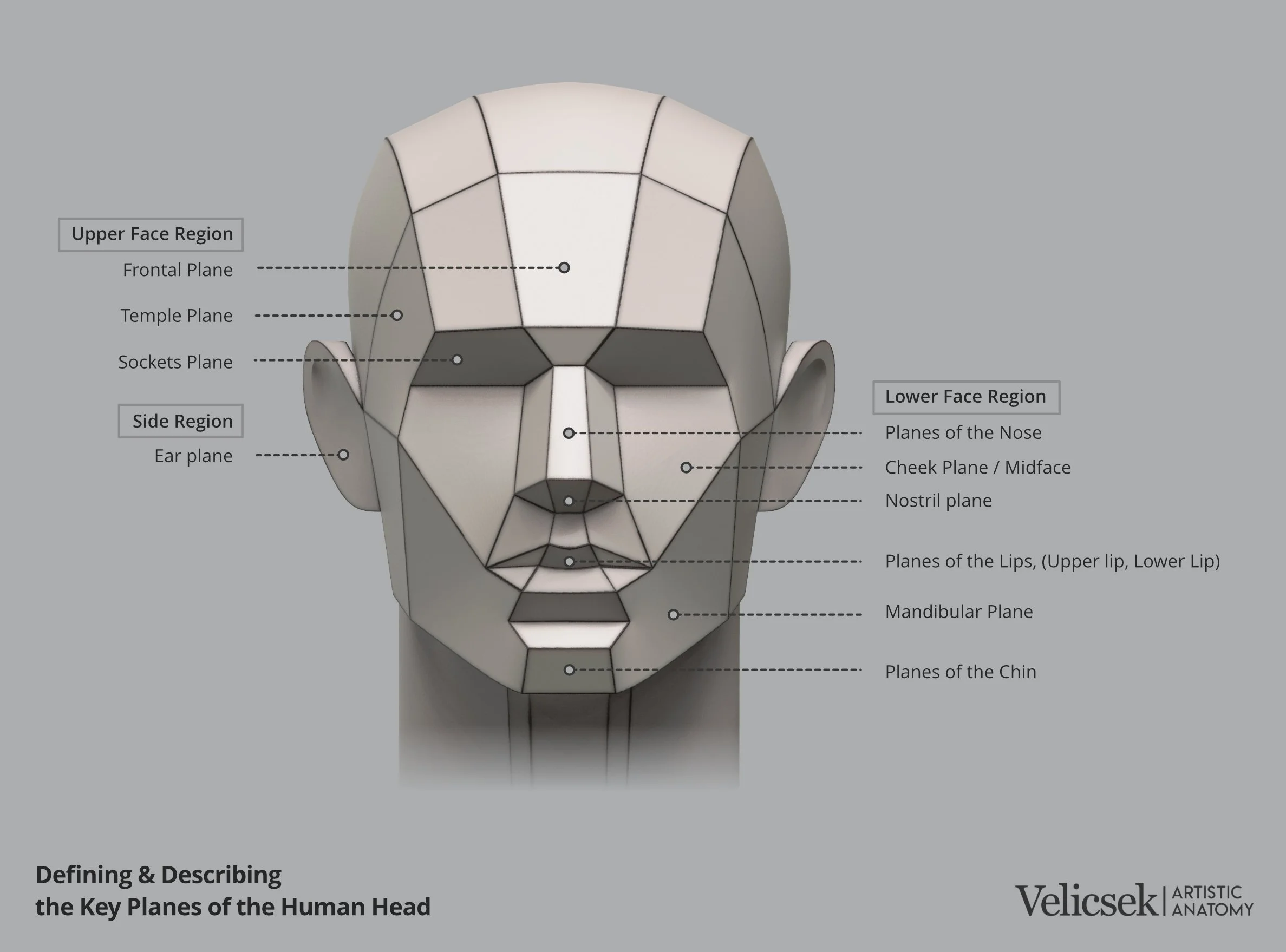
Planes & Regions — From the broad primary planes down to individual named regions, these studies define exactly where the front of the face ends and the side begins — a boundary that determines everything about how you render light.
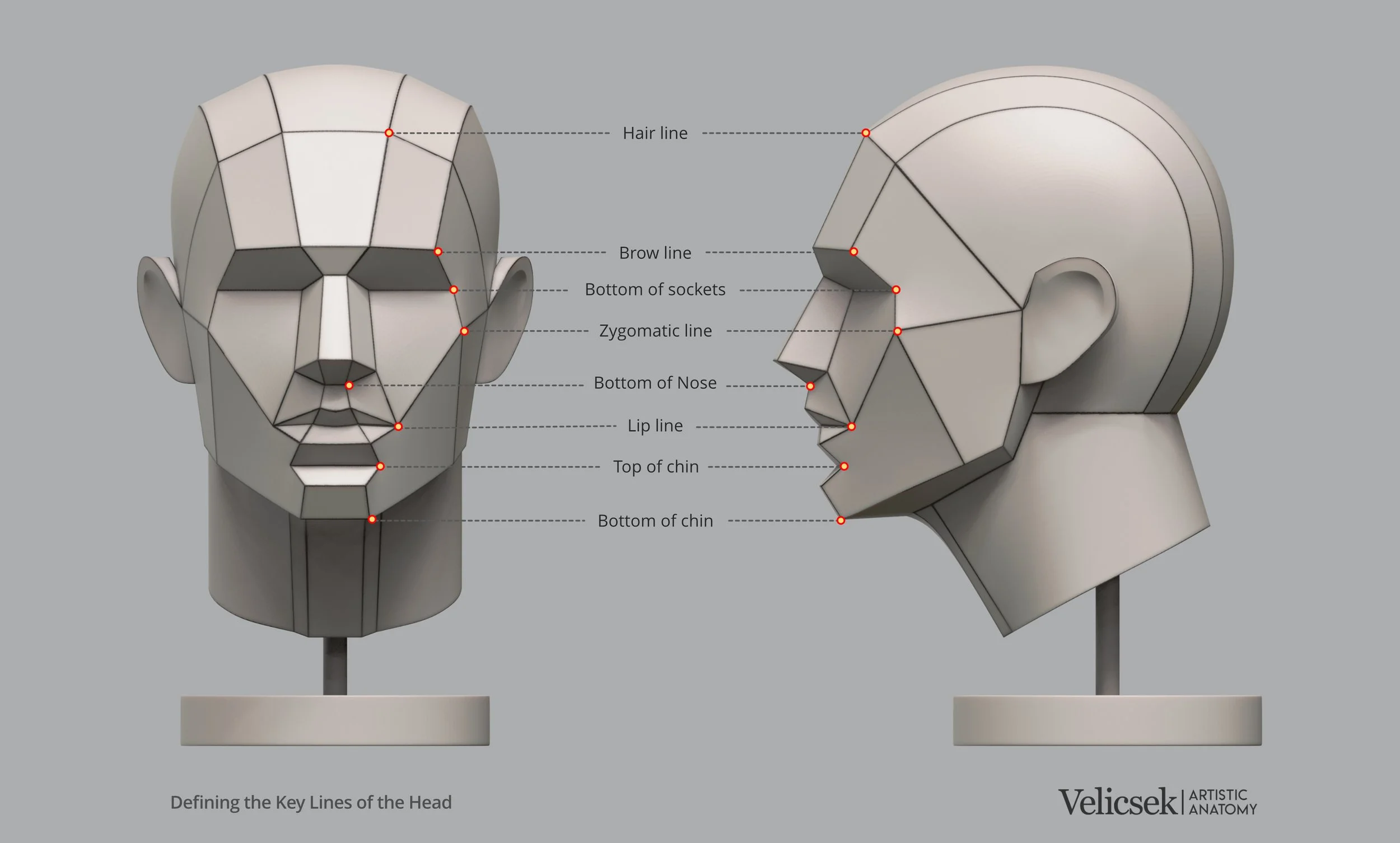
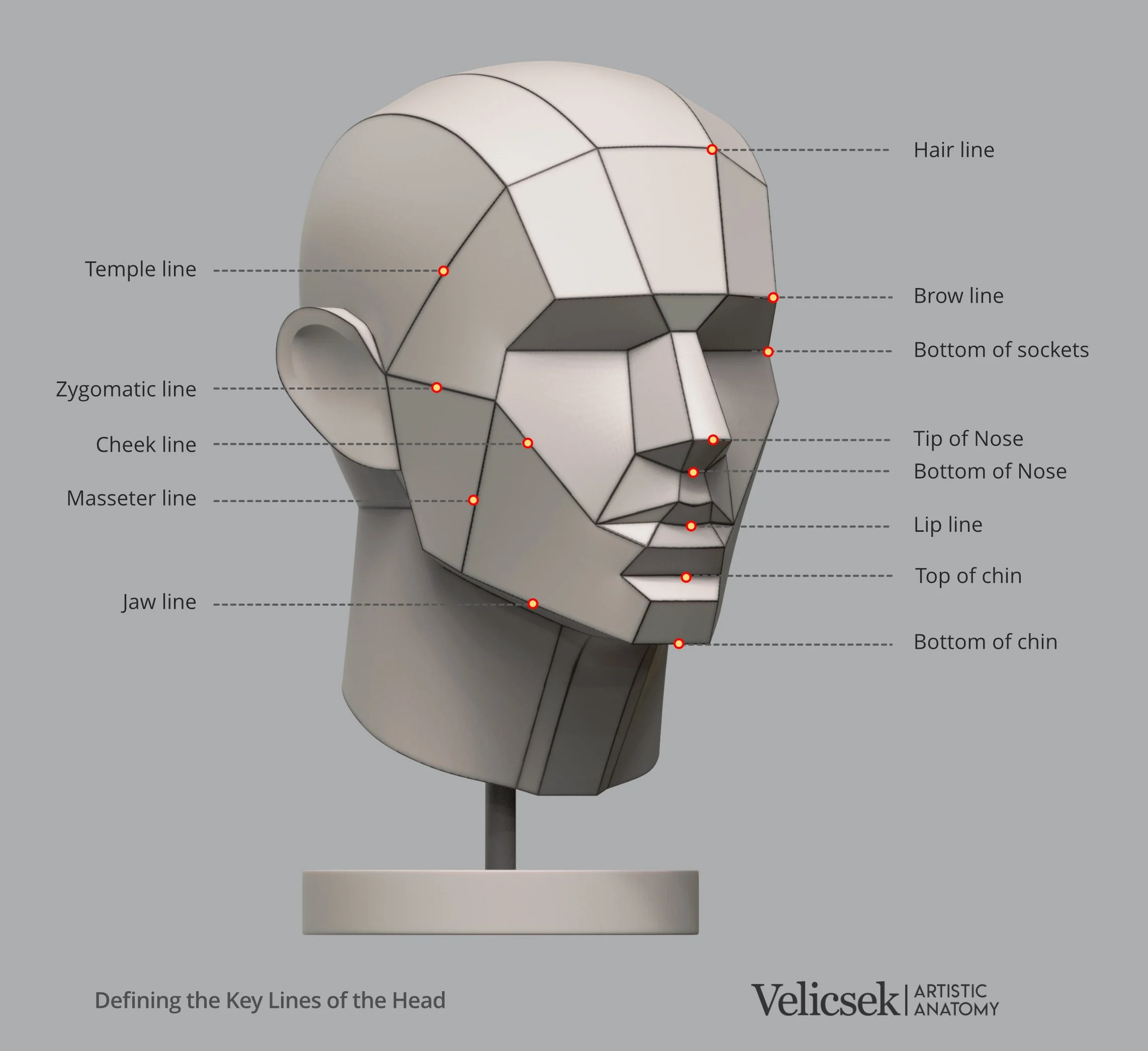
Key Lines of the Head — The horizontal landmarks that anchor proportion: hairline, brow, zygomatic arch, nose base, lip line, and chin. Mapped across front, side, and three-quarter views with red dot callouts.
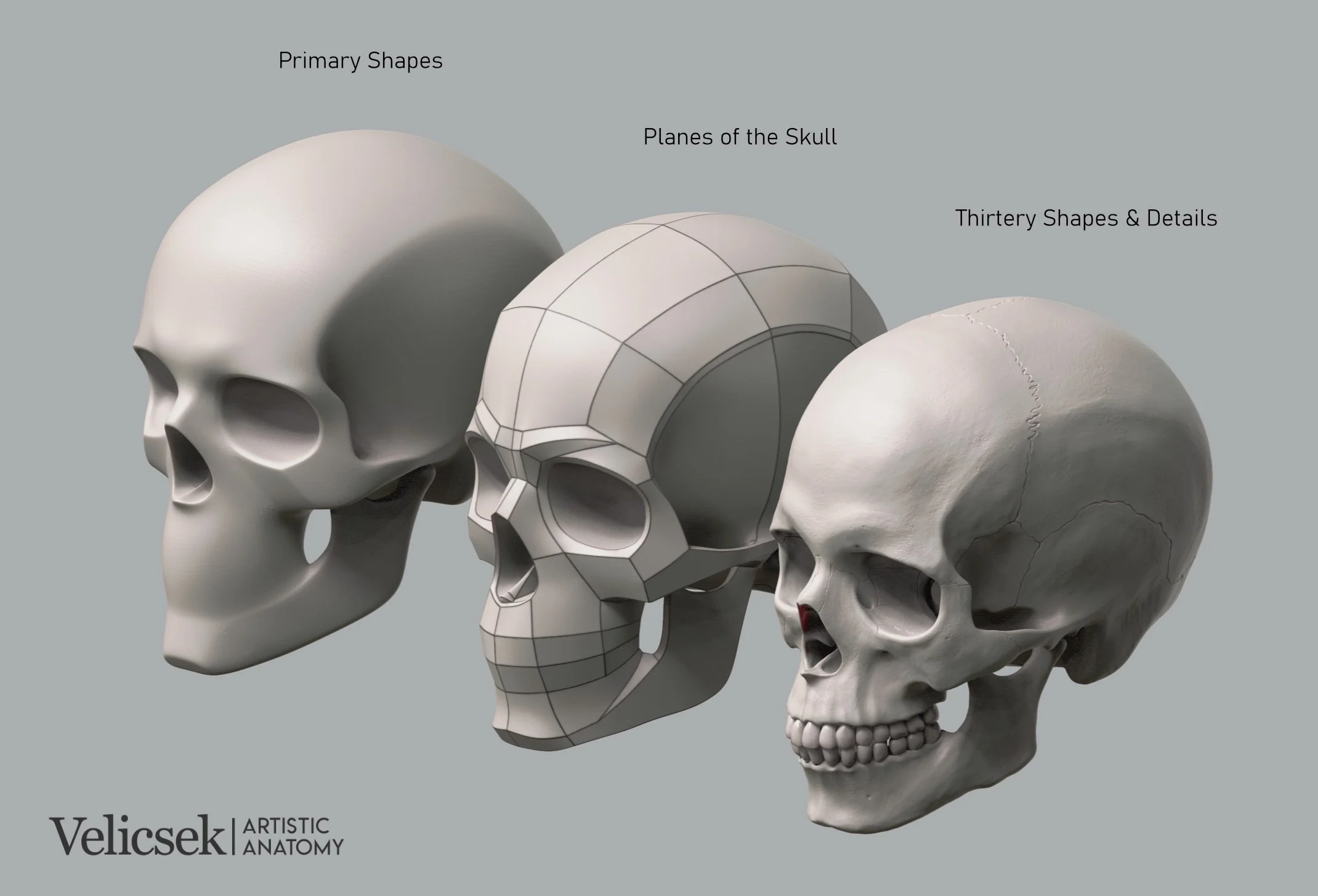
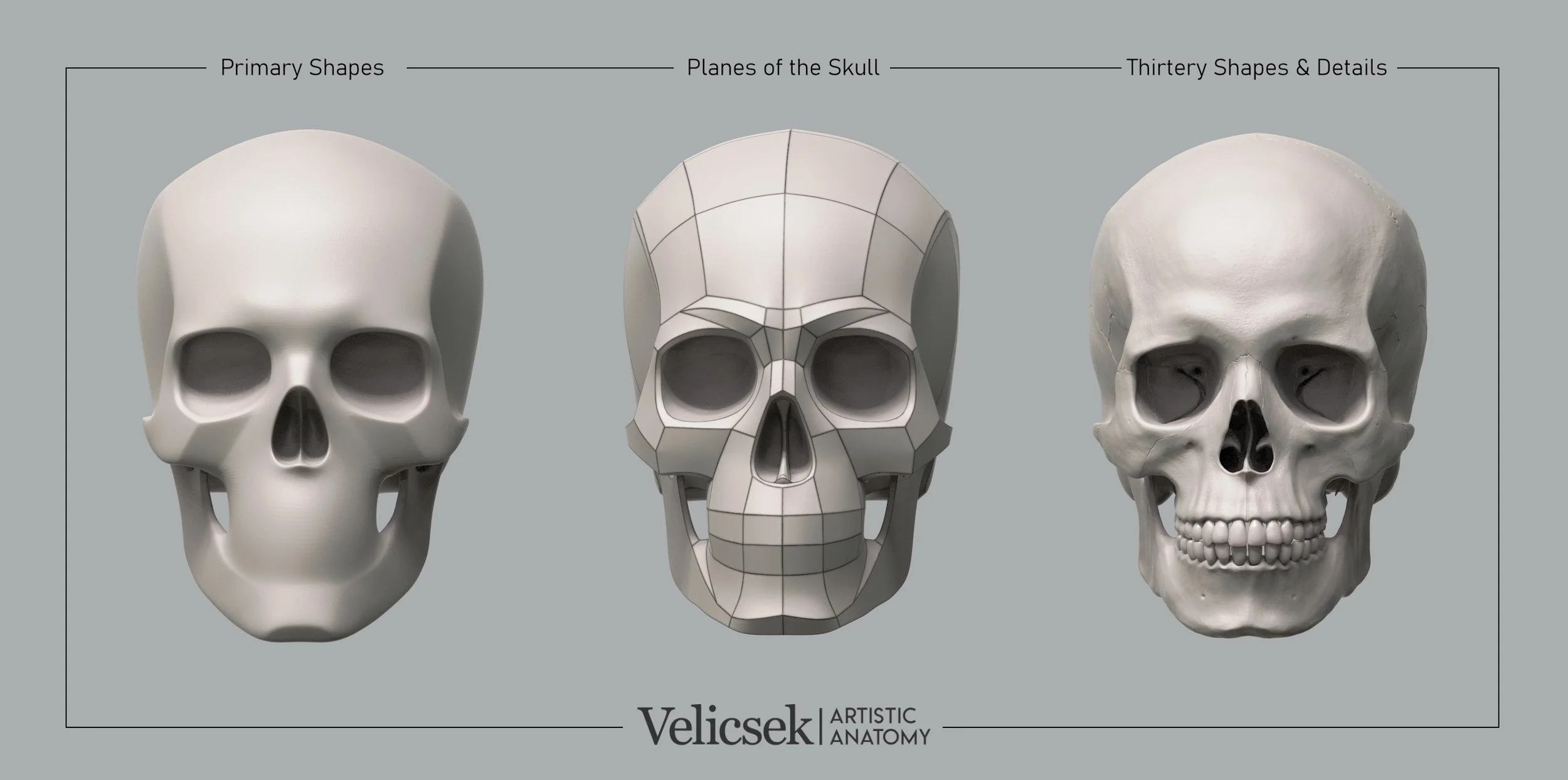
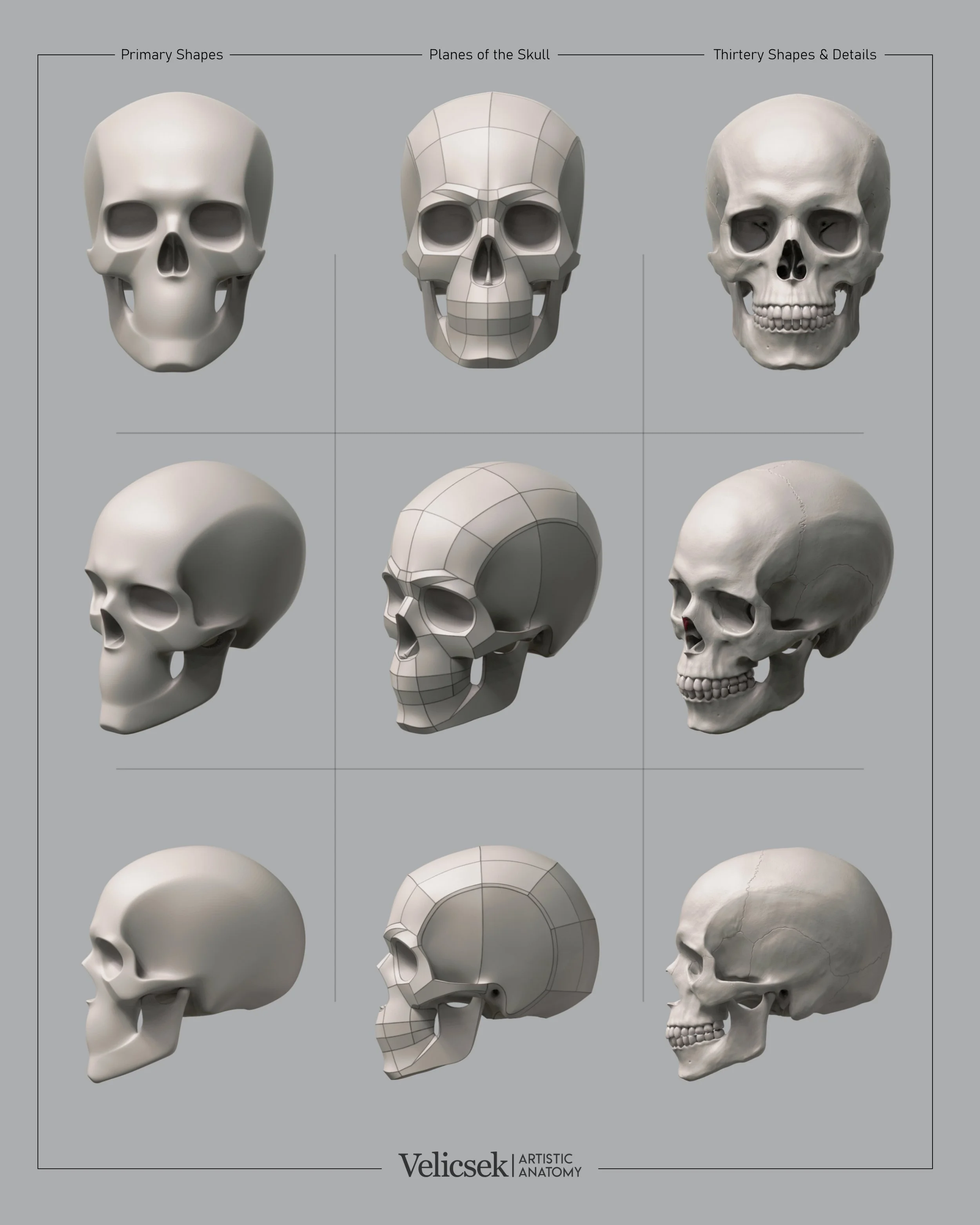
Skull Shapes & Planes — A nine-view progression from primary mass to detailed tertiary form, front, three-quarter, and side. The clearest way I know to show how complexity is built in layers.
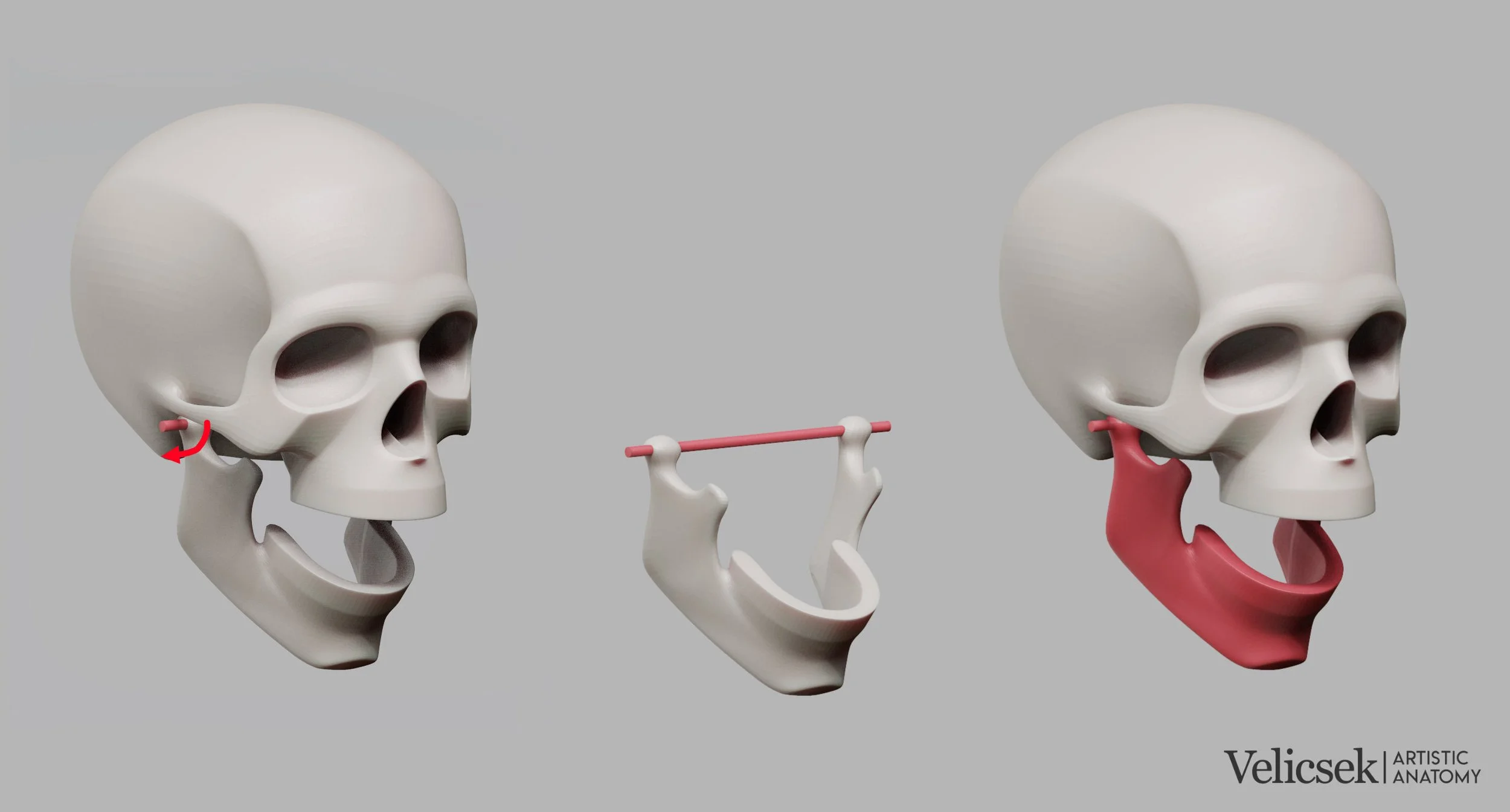
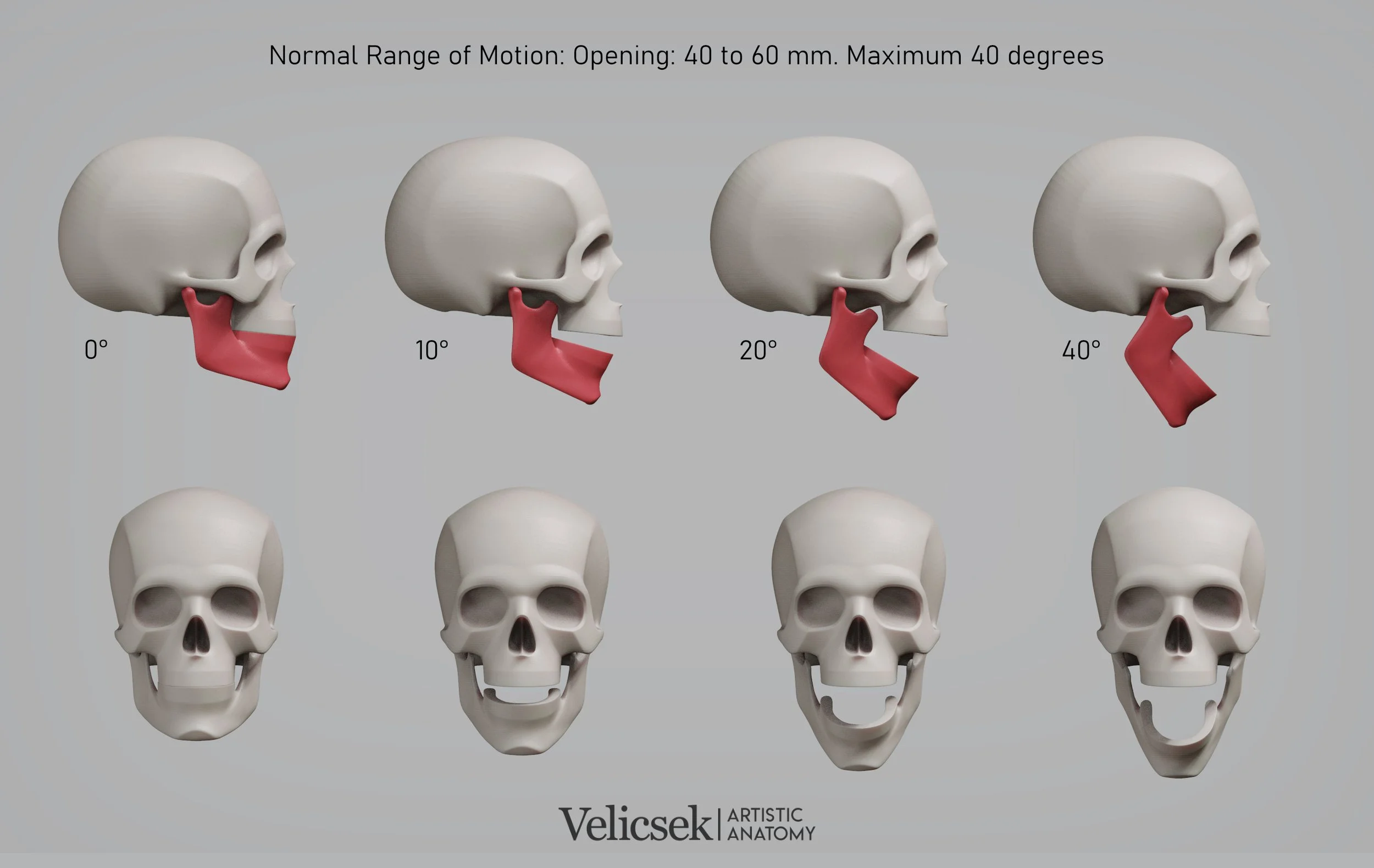
Jaw Anatomy & Range of Motion — The mandible isolated, pivoted, and mapped through its full 0–40 degree range of motion. Essential reference for anyone drawing open mouths, expressions, or foreshortened faces.
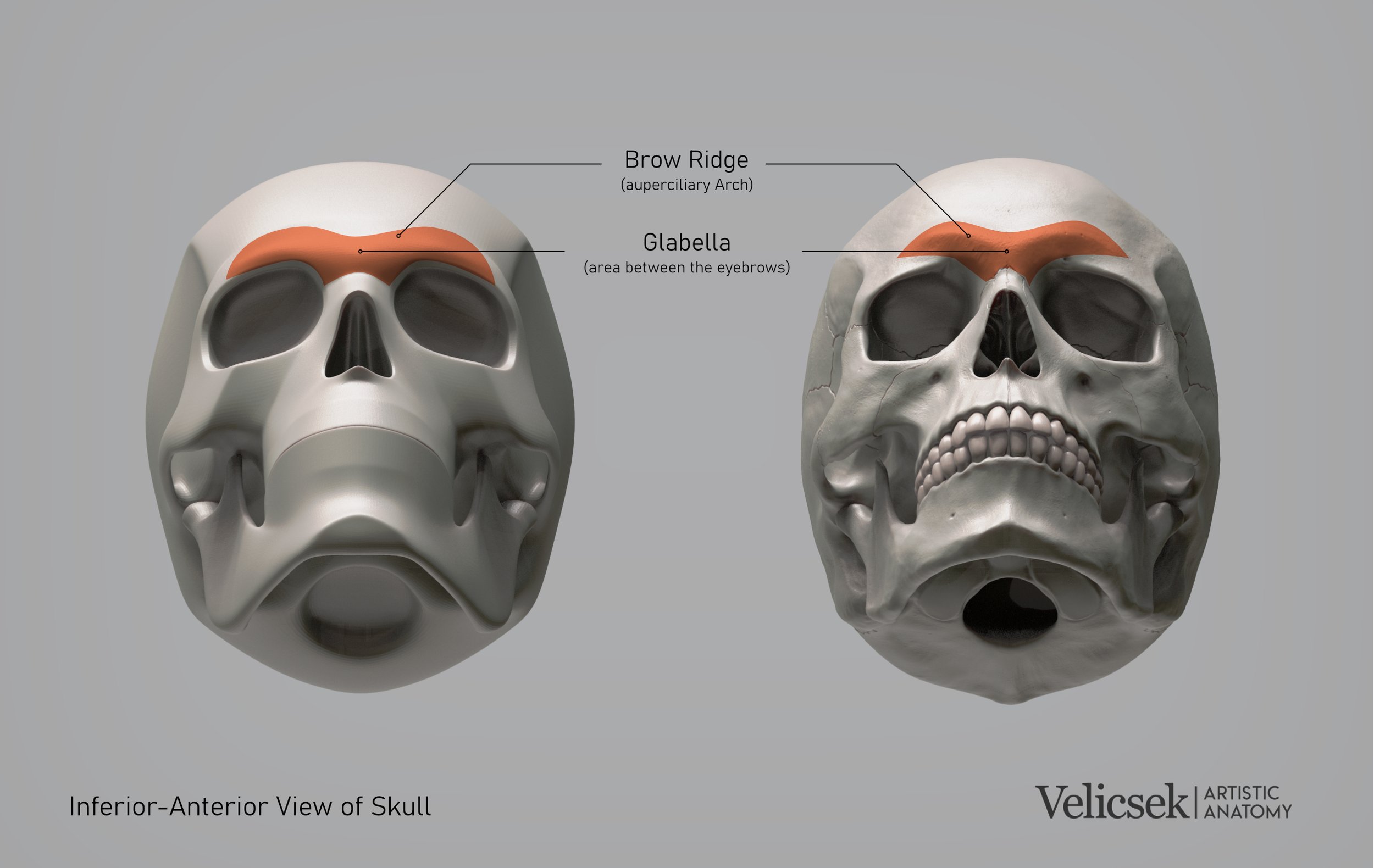
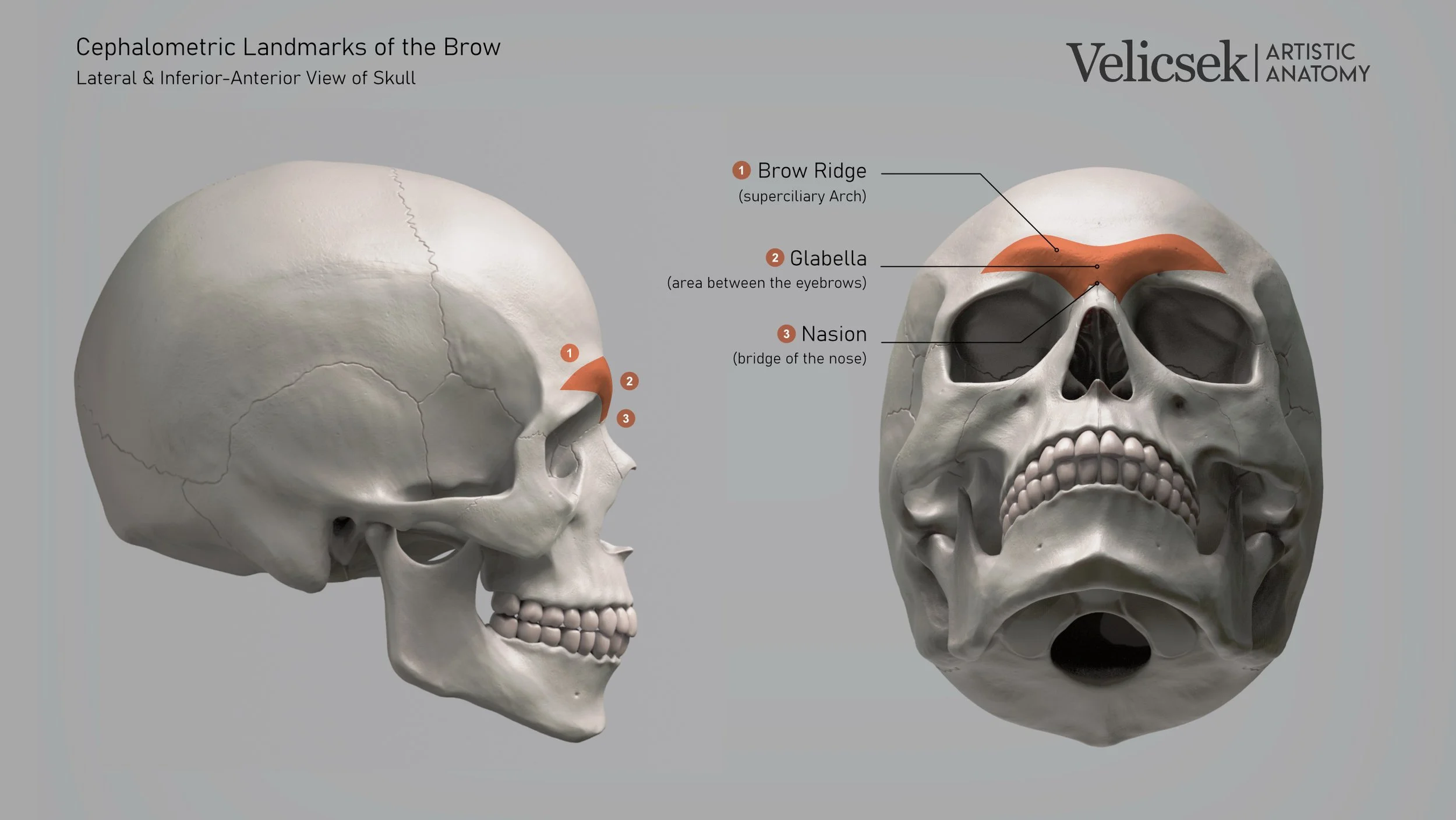
Brow & Glabella Landmarks — Cephalometric study of the brow ridge, glabella, and nasion — the three landmarks that define the critical transition between forehead and eye socket.
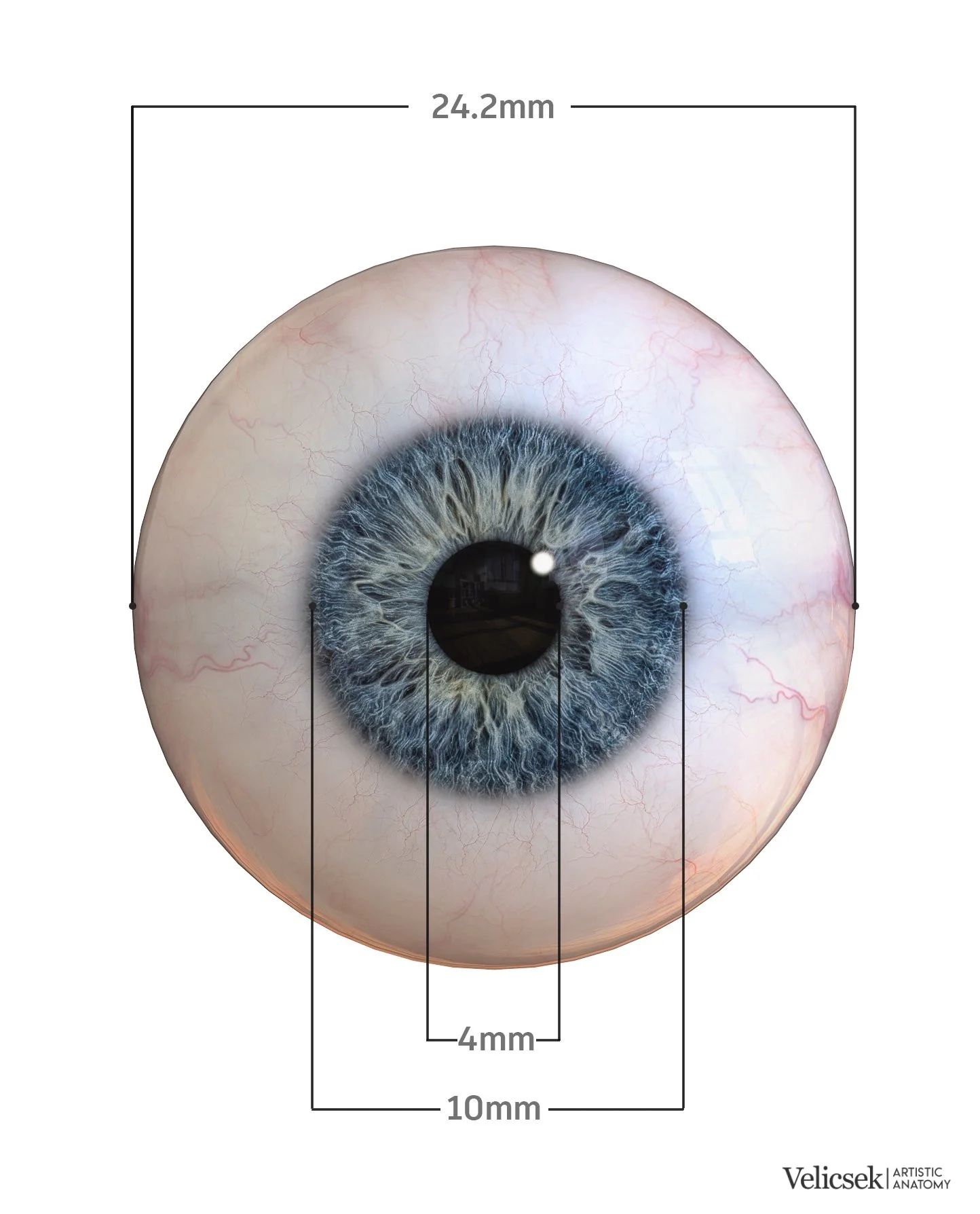
Eye Anatomy — A close study of the eyeball itself: 24.2mm globe, 10mm iris, 4mm pupil. Dimensions that finally answer the question of why the iris sits where it does.